New to Sweden with Kids? How to Enrol Your Child in School Step by Step
Moving to Sweden with a school-age child? Learn who to contact, how school placement works, how previous knowledge is assessed and what language support your child may receive.
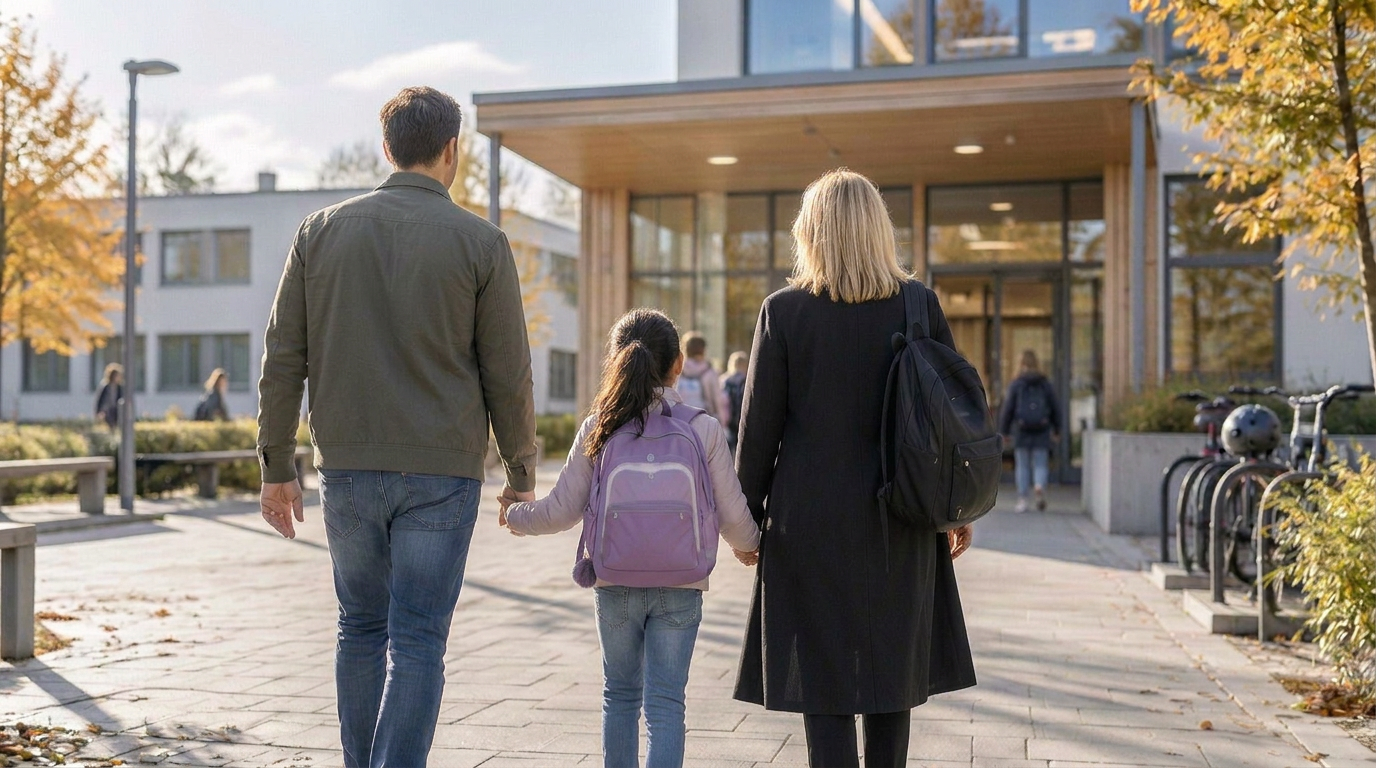
You have moved to Sweden.
There are boxes everywhere, you are still figuring out what a personnummer is, and suddenly someone asks:
“Which school will your child go to?”
Then come the Swedish words:
- kommun — municipality
- grundskola — compulsory school
- fritids — before- and after-school care
- modersmål — mother tongue
- förberedelseklass — preparatory class
It can feel like you need to understand the entire Swedish education system before your child can walk through a school door.
You really do not. Here is the process, step by step.
Step 1: Start with your kommun
Your kommun — municipality — is the first place to start.
The municipality where you live is responsible for ensuring that your child is offered a place in compulsory school — grundskola.*2
You can usually find the relevant information by searching for “school placement + [your municipality]” or “grundskola + [your municipality]”.
Application periods and procedures differ between municipalities, so do not assume the process in Stockholm is identical to Malmö, Uppsala or another municipality.*2
If you have just arrived and are unsure where to begin, contact your municipality and tell them:
“We are new to Sweden and need a school place for our child.”
That is enough to start the conversation.
Step 2: You can say which school you prefer
Being allocated a school place does not necessarily mean you receive one random school and have no choice.
Parents can state which municipal schools they would prefer their child to attend. You can choose schools across your municipality — not only the school physically closest to your home.*2
However, your first choice is not guaranteed. Municipalities must also consider placement rules such as the närhetsprincipen — proximity principle — which protects other children's right to a school reasonably close to home. This does not always mean the school that is closest in absolute distance.*2
Some municipalities may also use criteria such as sibling priority.
A useful strategy is therefore to compare several schools and list more than one acceptable option.
Step 3: Municipal and independent schools may use different applications
Sweden has both:
- kommunala skolor — municipal schools
- fristående skolor / friskolor — independent schools
Some municipalities include independent schools in the same digital school-choice system. Others do not.
If an independent school is not included in your municipality's application system, you normally apply directly to the school.*2
Independent schools may use approved selection criteria when they have more applicants than places. These can include queue time, sibling priority and geographical proximity. Their criteria must be objective, published in advance and applied consistently.*2
Some independent schools may also reserve a limited special quota for recently arrived pupils. Ask the school whether this applies.
If you are interested in a particular independent school, check its application process early.
Step 4: Do not panic if your child does not speak Swedish yet
This is one of the biggest worries for families arriving with older children.
A newly arrived child is not simply expected to walk into a Swedish classroom and figure everything out alone.
The school assesses the child's:
- previous schooling
- knowledge
- experiences
- interests.*1
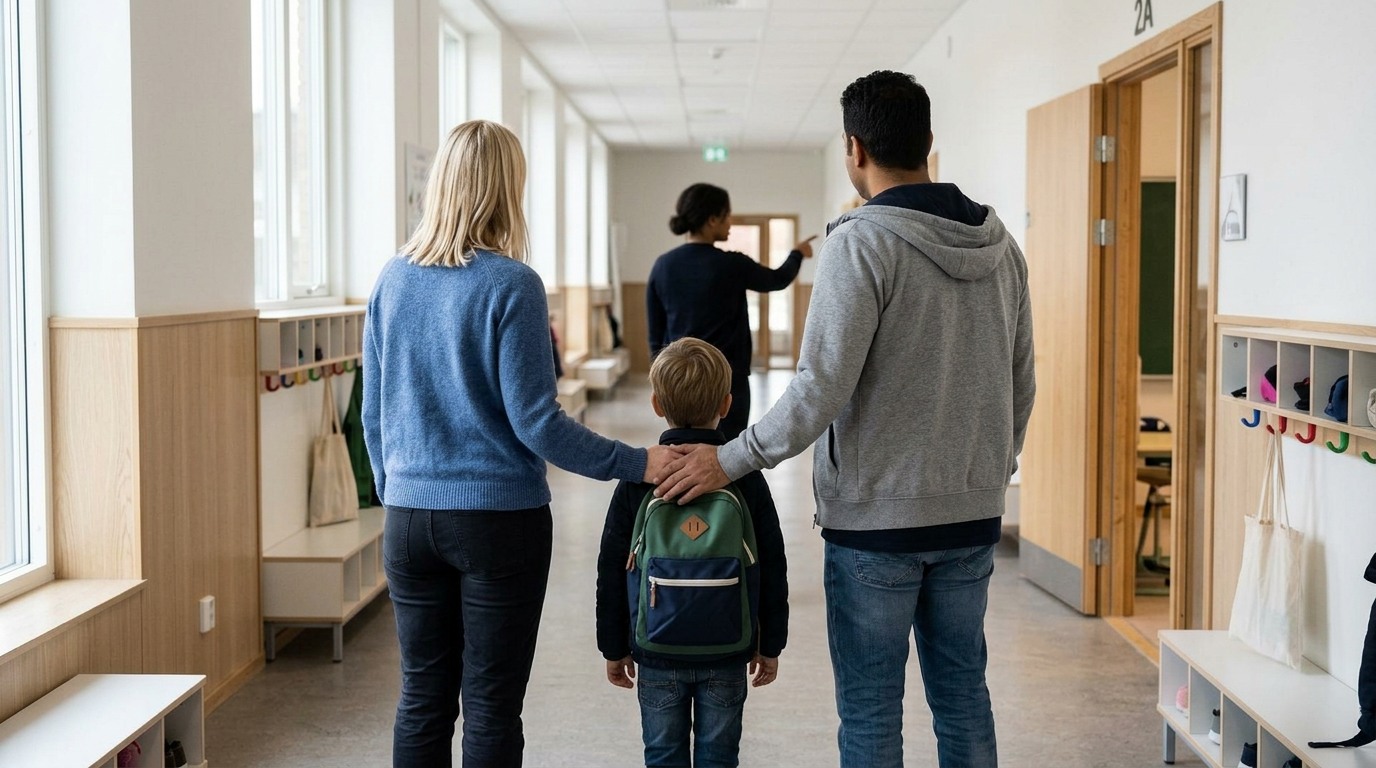
For newly arrived pupils, the assessment helps the school decide the appropriate year group and teaching arrangements.
The rektor — principal — decides the year placement, taking the assessment, the child's age and other personal circumstances into account.*3
For children covered by the rules on newly arrived pupils, the initial assessment must be carried out promptly so that decisions about year group and teaching group can be made within two months of the child first being received into the Swedish school system.*3
So arriving from another education system does not automatically mean starting again from zero.
Step 5: Ask what language support your child can receive
There are several Swedish terms worth knowing.
Svenska som andraspråk — Swedish as a Second Language
A child who needs support developing Swedish may study svenska som andraspråk, commonly abbreviated SVA. The school's rektor decides whether the child should receive SVA teaching.*1
Importantly, Swedish and Swedish as a Second Language give the same eligibility for upper-secondary school.*1
Studiehandledning på modersmålet — study guidance in the mother tongue
Some pupils may receive help learning school subjects through their strongest language while they are developing Swedish.*1
Modersmålsundervisning — mother-tongue instruction
Children with another mother tongue may have the right to study that language as a school subject from Year 1 when the eligibility conditions are met. The general rules include that the language is used at home and that the child has basic knowledge of it; special rules apply to national minority languages.*1
Förberedelseklass — preparatory class
A newly arrived pupil may temporarily take some lessons in a förberedelseklass. The goal is to move into regular teaching as soon as the pupil is ready.
A pupil may attend a preparatory class for a maximum of two years. Participation should end earlier, subject by subject, when the pupil has enough Swedish to follow regular teaching. Not every school offers a preparatory class.*1,*3
Step 6: Ask for an interpreter if you need one
This is worth knowing from day one.
If you do not understand Swedish, Skolverket says you have the right to help from a tolk — interpreter. Contact the school to arrange interpreting support for meetings or important information.*1
You do not need to sit through a meeting nodding politely while understanding 30% of what was said.
Ask.
Step 7: Years 7–9 may require an individual study plan
Newly arrived pupils entering Years 7–9 in compulsory school must have an individuell studieplan — individual study plan — when covered by these rules.*3
The school prepares it within two months, based on the initial assessment. The plan shows how the pupil can work towards becoming eligible for a national upper-secondary programme and should be reviewed as the pupil progresses.*3
This matters particularly for teenagers arriving in Sweden with only a few years left before gymnasium — upper-secondary school.
Step 8: Ask about fritids if you need care outside school hours
Fritidshem — school-age educare or before- and after-school care — is separate from the school day.
Children may be entitled to a place when their parents work or study, or when the child's own needs or family circumstances justify it. The entitlement can continue through the spring term of the year the child turns 13. From the autumn term of the year a child turns 10, a municipality may offer open leisure activities instead in some circumstances.*4
How you apply depends on the municipality. If your child attends an independent school, ask the school how its fritids provision works; if the school does not offer fritids, the home municipality is responsible for arranging it.*4
When you receive a school placement, remember to ask:
“How do we apply for fritids?”
A simple checklist for your first week
- ☐ Find your municipality's school-placement page
- ☐ Contact the municipality if you are unsure where to apply
- ☐ Look at several schools rather than only one
- ☐ Check whether independent schools require separate applications
- ☐ Tell the school about your child's previous schooling
- ☐ Ask how your child's knowledge will be assessed
- ☐ Ask what Swedish-language support is available
- ☐ Ask about mother-tongue support if relevant
- ☐ Request an interpreter if you need one
- ☐ Ask about fritids if you need before- or after-school care
- ☐ Confirm your child's start date and practical information with the school
And then: give everyone a little time.
Your child is learning a new school, possibly a new language and maybe an entirely new country. You are learning a new system too.
Neither of you needs to understand everything on day one.
Sources
- Skolverket / Utbildningsguiden — New in Sweden with children aged 6–16 School rights, parent involvement, interpreter support, Swedish as a Second Language, mother-tongue support and preparatory classes.
- Skolverket / Utbildningsguiden — Application and admission to compulsory school Municipal responsibility, school choice, application systems and placement rules.
- Skolverket — Education for newly arrived pupils Initial assessment, year placement, preparatory classes and the two-month requirement.
- Skolverket — The right to fritidshem or open leisure activities Eligibility, age limits and responsibility for school-age educare.
Information checked 23 September 2026. This article provides general guidance. Application procedures and placement rules vary between municipalities and schools, and rights can depend on the child's residence or migration status. Check with your municipality and the school you are applying to.