Swedish School Terms Every Parent Should Know
A parent's guide to Swedish school terms: what fritids, skolval, meritvärde, SALSA, SVA and modersmål actually mean — and why they matter when choosing a school in Sweden.
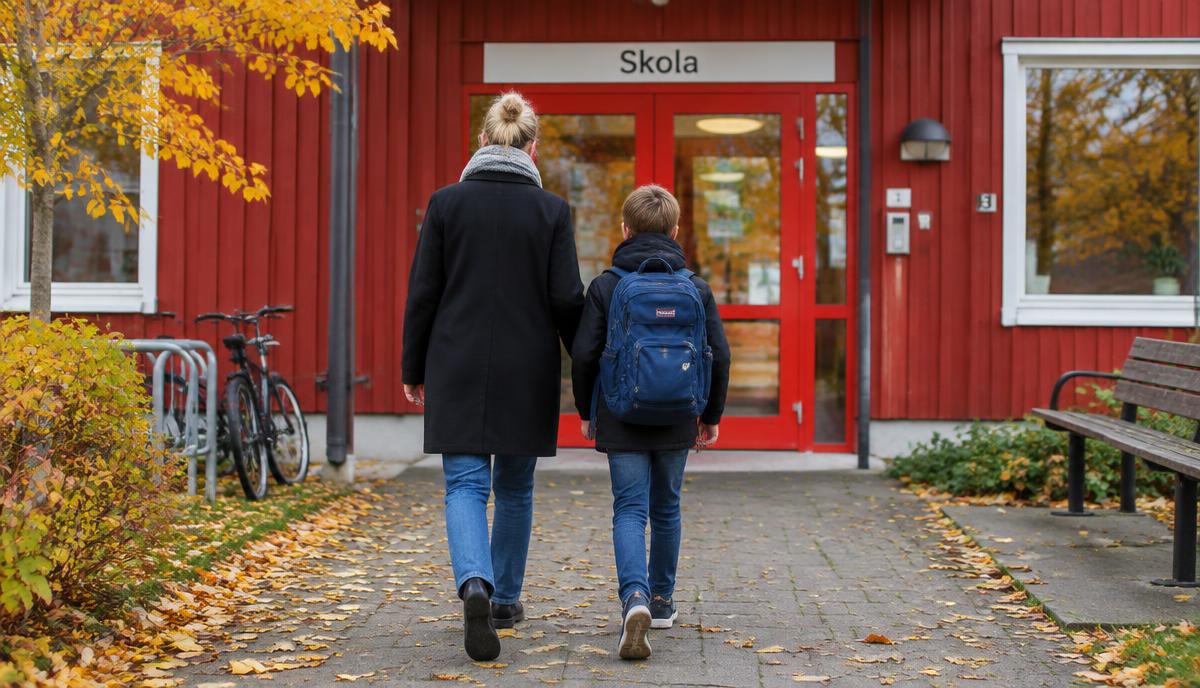
You open a Swedish school page and see:
fritids. friskola. huvudman. SVA. meritvärde. SALSA. studiero.
At some point, choosing a school starts to feel like a language test for the parent.
It doesn't need to. Here are the Swedish school terms parents are most likely to encounter — and why they matter.
Grundskola
Meaning: Compulsory school.
This is Sweden's compulsory school system for school-age children. [1]
Why it matters: When searching for primary or lower-secondary schools in Sweden, grundskola is one of the main search terms you will encounter.
Förskoleklass
Meaning: Preschool class.
Under the current system, förskoleklass is the compulsory year before Year 1. [1]
Fritids / fritidshem
Meaning: School-age educare before and after school.
Fritids is mainly for children aged 6–13 and can be available before school, after school and during school holidays. It complements school and has its own educational purpose. [2]
Why it matters: It is not simply babysitting while parents work.
Kommunal skola
Meaning: Municipal school.
A school run by the municipality. The municipality is the school's huvudman — responsible organising body. [3]
Fristående skola / friskola
Meaning: Independent school.
A school operated by an organisation other than the municipality, such as a company, foundation or association. Independent schools must be approved by Skolinspektionen and their education must correspond to municipal-school education. [3]
Why it matters: "Independent" does not mean the same thing as a private fee-paying school in many other countries.
Huvudman
Meaning: The organisation legally responsible for the school.
For a municipal school, the municipality is the huvudman. For an independent school, it is the organisation operating the school. [3]
Why it matters: If you have made a complaint to the school and the issue is not resolved, the huvudman is an important next level in the complaint process.
Skolplikt
Meaning: Compulsory schooling.
Sweden has compulsory schooling, meaning children covered by the rules are required to participate in education during the compulsory-school years. [1]
Why it matters: It is different from preschool, which is voluntary.
Skolval
Meaning: School choice.
Parents can state which school they would like their child to attend. A preferred municipal school is not always guaranteed because placement rules and the rights of other children must also be considered. [4]
Why it matters: School choice is a preference process, not an automatic guarantee of the first school you select.
SVA — Svenska som andraspråk
Meaning: Swedish as a Second Language.
SVA is a school subject for students who need teaching designed to support their development of Swedish as a second language. The principal decides whether a pupil should study SVA. [5]
Swedish and Swedish as a Second Language provide the same eligibility for upper-secondary school. [5]
Why it matters: SVA is not simply "extra Swedish lessons".
Modersmålsundervisning
Meaning: Mother-tongue instruction.
Under certain conditions, pupils can have the right to study their mother tongue as a school subject from Year 1. [5]
Why it matters: This is different from general multilingual support in preschool.
Studiehandledning på modersmålet
Meaning: Study guidance in the pupil's mother tongue.
This support helps multilingual pupils develop their knowledge in school subjects using their mother tongue or, in some situations, another strong school language. [5]
Why it matters: It is different from modersmålsundervisning. One is support for learning other subjects; the other is instruction in the language itself.
Meritvärde
Meaning: Grade score used for upper-secondary admission.
A pupil's meritvärde is normally calculated from their 16 best Year 9 grades. If modern languages has been studied as a language choice, a 17th grade can be included. The maximum is therefore 320 or 340 points. [6]
When comparing schools, you may see a school's average meritvärde.
Why it matters: It can tell you something about academic results, but a high meritvärde alone does not prove that a school is "better".
Gymnasiebehörighet
Meaning: Eligibility for a national upper-secondary programme.
Pupils need passing grades in specified subjects to be eligible. Requirements vary depending on the upper-secondary programme. [6]
Why it matters: This tells you something different from average meritvärde: it can show how many pupils leave compulsory school with the grades needed to continue into national upper-secondary programmes.
SALSA
Meaning: Skolverket's statistical analysis model for school results.
SALSA analyses school results while taking account of certain background factors in the pupil population. [10]
Very important: Skolverket explicitly says SALSA should not be used to rank schools.
Why it matters: It adds context to academic results rather than producing a "best school" score.
Skolenkäten
Meaning: The School Survey.
Survey data captures experiences of school in areas such as safety and study environment.
Why it matters: Academic results tell you one part of the story. Survey data can help you understand how pupils experience the school.
Trygghet
Meaning: Safety / feeling secure at school.
Swedish pupils have a right to an educational environment characterised by trygghet — safety and security. [7]
Why it matters: A school with excellent grades but poor pupil experiences of safety deserves a closer look.
Studiero
Meaning: Study environment / conditions that allow pupils to concentrate.
Pupils have a right to teaching characterised by studiero. [7]
Why it matters: This is one of the useful non-academic indicators to examine when comparing schools.
Extra anpassningar
Meaning: Extra adjustments within ordinary teaching.
If there is concern that a pupil may not meet the required assessment or grading criteria, the pupil should promptly receive appropriate support in the form of extra adjustments within ordinary teaching. [8]
Why it matters: A formal diagnosis is not automatically required before a pupil can receive support. [8]
Särskilt stöd
Meaning: Special support.
This refers to more substantial support that normally cannot be provided within ordinary teaching arrangements. Decisions about special support are made through the school's formal support process. [8]
Åtgärdsprogram
Meaning: Formal action programme for special support.
If an investigation shows that a pupil needs särskilt stöd, a decision on an åtgärdsprogram must be made. [8]
Why it matters: This is more formal than ordinary classroom adjustments.
If you're choosing a school, remember these six
You do not need to memorise the entire Swedish education dictionary. For school comparison, start with:
| Term | What it tells you |
|---|---|
| Meritvärde | Academic results |
| Gymnasiebehörighet | How many pupils qualify for upper-secondary programmes |
| SALSA | Academic results with added context |
| Trygghet | How safe pupils feel |
| Studiero | Whether the environment supports concentration |
| Lärarbehörighet | Teacher qualification information |
And never choose a school based on a single number. A school is more than its average grades.
Sources
- Skolverket / Utbildningsguiden — Välja grundskola Official overview of compulsory schooling and school choice.
- Skolverket / Utbildningsguiden — Om fritidshemmet Official description of fritids before, after and during school holidays.
- Skolverket / Utbildningsguiden — Fakta och tips när du ska välja grundskola Municipal and independent schools and the role of the huvudman.
- Skolverket / Utbildningsguiden — Ansökan och antagning till grundskolan Official rules on school placement and school choice.
- Skolverket / Utbildningsguiden — Ny i Sverige med barn 6–16 år SVA, mother-tongue instruction and study guidance in the mother tongue.
- Skolverket / Utbildningsguiden — Gymnasieskolan Upper-secondary eligibility and how meritvärde is calculated.
- Skolverket — Trygghet, värdegrund och arbetsmiljö Pupils' right to a safe environment and conditions that support study.
- Skolverket — Extra anpassningar, särskilt stöd och åtgärdsprogram Official definitions of extra adjustments, special support and action programmes.
- Skolverket — Tioårig grundskola The new 10-year compulsory school from 2028.
- Skolverket — Salsa, en statistisk modell What SALSA is and why it should not be used to rank schools.
Terminology and rules can change. This glossary reflects official information available in October 2026.