What Is Öppen Förskola? Sweden's Open Preschool Explained for Parents
What is öppen förskola in Sweden? Learn how open preschool works, who can go, what babies and toddlers do there, whether it is free and why it can be a great place to meet other parents.
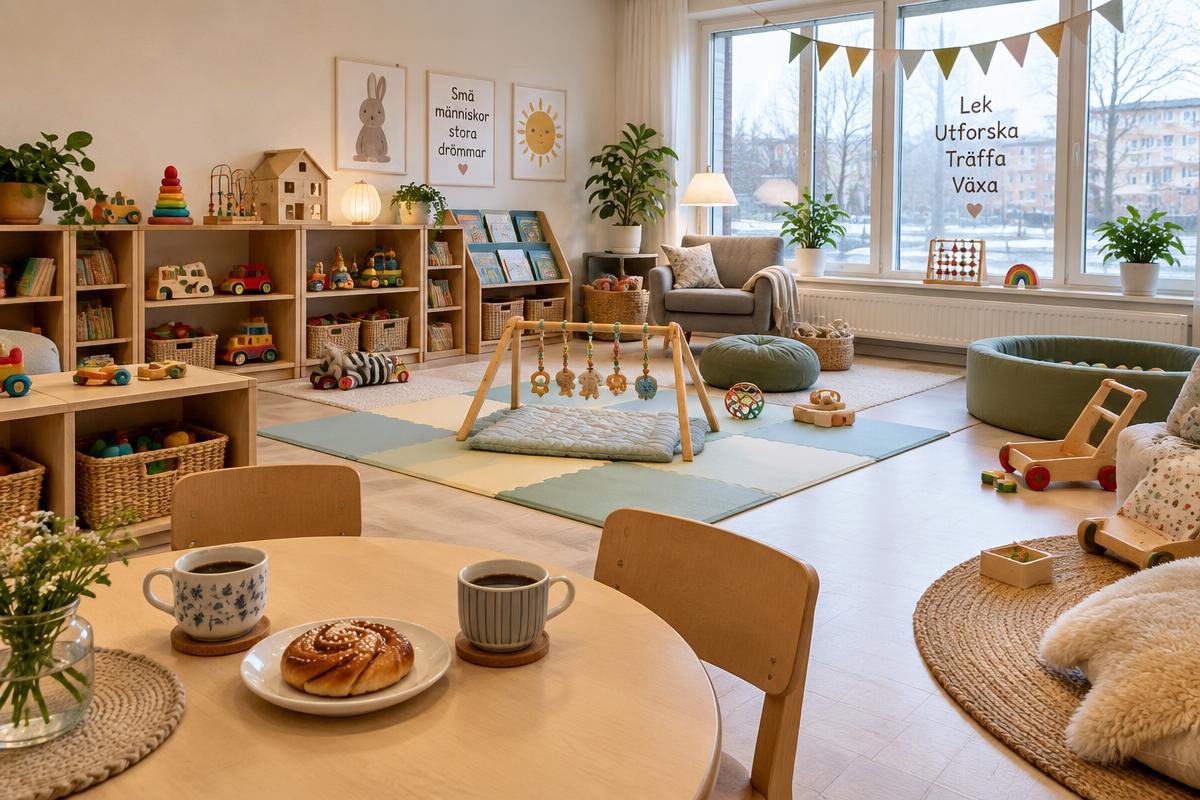
You are home with a baby or toddler.
You love them very much.
You have also discussed the washing machine, a banana and the same toy giraffe approximately 47 times before lunch.
You would quite like to speak to another adult.
Then someone says:
“Why don't you go to öppen förskola?”
To what?
Öppen förskola — open preschool — is a place where young children can play and join activities while their parent, grandparent or another adult stays with them. Children are not enrolled like they are in regular preschool, and families can participate more flexibly.
It can also be a great place for parents to meet other parents, especially if you are on parental leave, your child has not started preschool yet or you have recently moved to Sweden.
And yes:
You stay with your child.
This is not daycare.
So, what exactly is öppen förskola?
The name can be confusing because it sounds almost identical to *förskola — regular preschool*.
But they are different.
At öppen förskola:
- your child is not formally enrolled
- you come together with your child
- the accompanying adult stays during the visit
- participation is generally flexible
- children can play and join pedagogical activities
- adults have an opportunity to meet other families
Skolverket — the Swedish National Agency for Education — specifically says that open preschool should offer children pedagogical activities together with their accompanying adults and give adults an opportunity for social interaction and community.
So it is not only about keeping your toddler entertained.
It is allowed to be good for you, too.
Öppen förskola vs regular förskola
| Öppen förskola | Regular förskola |
|---|---|
| You stay with your child | Parent normally leaves the child |
| Child is not formally enrolled | Child has a preschool place |
| Flexible participation | Regular schedule |
| Activities for child and accompanying adult | Early childhood education and care |
| Can be a social meeting place for families | Part of Sweden's formal preschool system |
Legally, there is also a difference.
Regular *förskola* is part of the Swedish school system.
Öppen förskola belongs to what the Education Act calls annan pedagogisk verksamhet — other pedagogical activities.
What actually happens there?
It depends on the location and the day, but you may find a mixture of play, singing, creative activities and parent meet-ups.
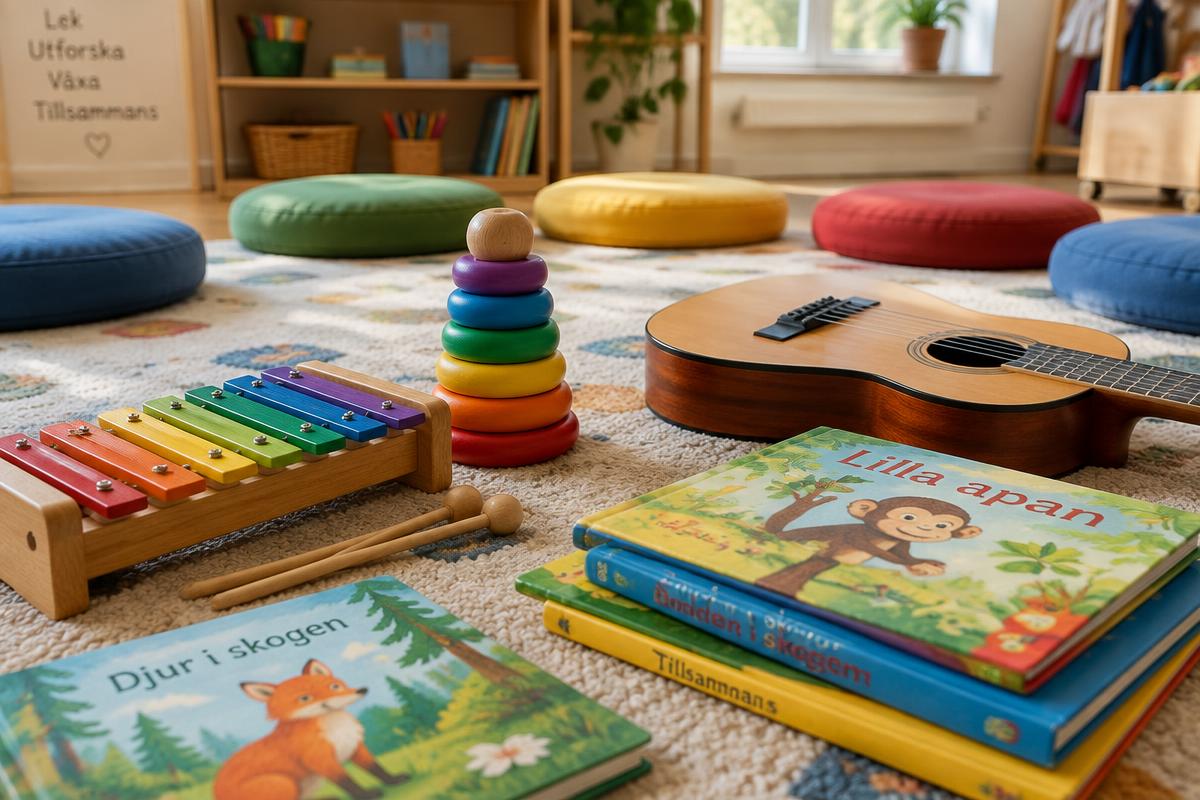
| 🎵 PLAY & SING | ☕ MEET OTHER PARENTS | 🌍 FIND YOUR COMMUNITY |
|---|---|---|
| Toys, books, baby areas, singing sessions and simple crafts | Sit down, have a coffee and talk to other adults with children | Especially useful if you are new to Sweden or do not yet have a local network |
| Your baby might watch other babies from a play mat | Start with the universal conversation starter: “How old is yours?” | Some locations also offer language activities or newcomer support |
Stockholm City describes open preschool activities such as play, singing, storytelling and creative activities.
Gothenburg also lists activities including play, singing and painting, led by trained staff.
You do not have to join everything.
Sometimes the day's achievement is simply:
We left the house.
That counts.
It is for the parent too
Having a baby can be wonderful.
It can also be unexpectedly lonely.
Your colleagues are at work. Your old routines have disappeared. Friends may be living very different lives. Family might be in another city — or another country.
And if you have just moved to Sweden, you may not know anyone locally.
This is one of the reasons öppen förskola can be so useful.
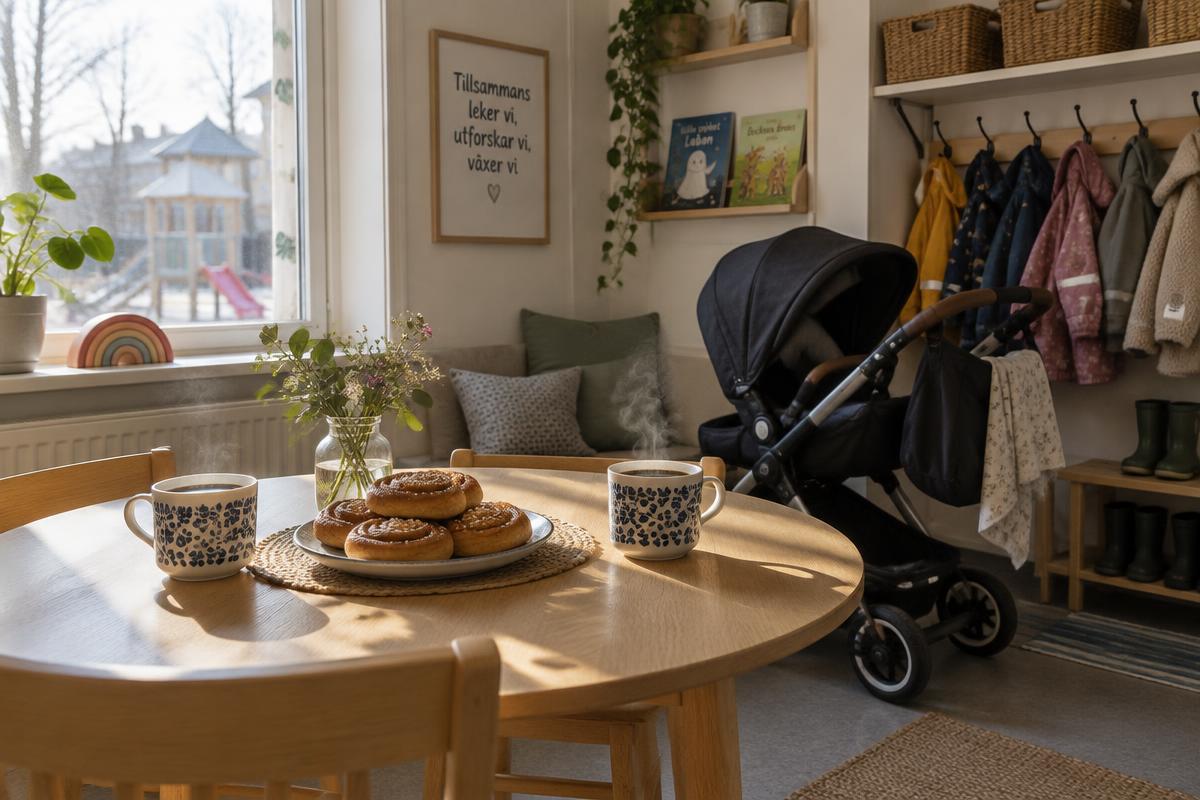
Skolverket explicitly includes social community for accompanying adults as part of the purpose of open preschool.
Stockholm City also says parents can make new contacts and build social networks with other parents, while Gothenburg describes open preschool as a place to meet families and exchange experiences.
So if your baby spends 30 minutes staring suspiciously at another baby while you finally talk to an adult:
that is a perfectly successful visit.
What about babies? Are they really “socialising”?
A four-month-old is obviously not going to make a best friend and arrange a playdate.
But babies and toddlers can still experience:
- other children
- new faces and voices
- songs and movement
- different toys and environments
- gradually playing beside and interacting with other children
Swedish rules for open preschool say activities should promote broad social contact and social community for children.
What that looks like naturally changes with age.
For a baby, it may simply mean watching and listening.
For a three-year-old, it may mean building a tower with another child and then arguing passionately about who owns the red block.
Both count.
New to Sweden? Öppen förskola may be especially useful
Moving country with a baby or toddler can be isolating.
You may not have:
- colleagues yet
- family nearby
- a parent network
- much Swedish
- any idea where families actually meet
Open preschool gives you somewhere to start.
Gothenburg City specifically describes it as a place where families new to Sweden can meet others, practise Swedish and learn more about Swedish society.
Some Stockholm open preschools also offer introduktionsförskola — introductory open preschool, including activities aimed at families who are new to Sweden.
At some locations there are also opportunities for parents to practise Swedish together with their children.
And you do not need perfect Swedish to walk through the door.
Hej, tack and kaffe will already get you surprisingly far.
Can I ask for parenting support there?
Often, yes.
Open preschool is not only a room full of toys.
Stockholm City says trained staff can provide parents with support and guidance, and some locations cooperate with services such as BVC — barnavårdscentral, the child health centre.
Individual open preschools may also organise things such as:
- baby groups
- parenting groups
- talks and information sessions
- language activities
- singing sessions
- visits from family-support services
Programmes vary, so check what your local location offers.
Do I need to register?
For ordinary open preschool, there is no regular preschool place to apply for.
Skolverket states that children are not enrolled; families decide whether and how much they participate.
Many locations therefore operate on a drop-in basis.
However, individual activities — such as a specific baby group, course or language session — may require registration.
A good rule is:
Normal visit? Check the opening hours and go.
Special activity? Check whether you need to book.
Is öppen förskola free?
Often — but do not assume this is identical everywhere in Sweden.
Municipalities are not required by law to provide open preschool, so local arrangements can differ.
Ordinary visits to Stockholm City's open preschools are free, although specific activities can have separate arrangements.
Gothenburg City's open preschools are also free to attend.
If you live elsewhere, check your municipality or the individual provider.
Does every municipality have öppen förskola?
No.
It is widespread, but not universal.
According to Skolverket's statistics for 2025, Sweden had 539 open preschools in 237 of the country's 290 municipalities.
So if you search and cannot immediately find one in your municipality, that does not necessarily mean you are searching incorrectly.
How do I find an öppen förskola near me?
You can browse the open preschools listed here on School Reviews — see our open preschool directory — or Google:
“öppen förskola + your municipality”
For example:
öppen förskola Stockholm öppen förskola Göteborg öppen förskola Malmö öppen förskola Uppsala
Before you go, check:
☐ Opening hours ☐ Age groups ☐ Baby-specific sessions ☐ Drop-in or registration ☐ Singing or activity times ☐ Language activities ☐ Holiday closures ☐ Rules about bringing food
Opening hours can be surprisingly specific, so checking before putting everyone into waterproof trousers and leaving the house is usually worthwhile.
What should I bring?
Usually, nothing unusual.
For a baby or toddler:
🍼 Milk or food if needed 👶 Nappies 👕 Spare clothes 🍌 Snack, if food is allowed 🧦 Socks ☕ Coffee, depending on the location and your level of optimism
And perhaps most importantly:
You do not have to arrive ready to make five new best friends.
Go once.
Sit down.
Let your child explore.
Say hello to someone if you feel like it.
Then see whether you want to come back.
Quick questions about öppen förskola
Can babies go to öppen förskola?
Yes. Many open preschools welcome babies, and some have specific baby sessions. Exact age groups depend on the location.
Do parents stay?
Yes. The child attends together with a parent or another accompanying adult.
Is it the same as normal preschool?
No. Your child is not enrolled and you stay during the visit.
Do I need to join a preschool queue?
Not for an ordinary open preschool place, because children are not enrolled in the same way as regular preschool.
Is it free?
Many municipal open preschools are free, including the Stockholm and Gothenburg examples in this guide, but always check locally.
Can I go if I don't speak Swedish?
Yes. You do not need to speak fluent Swedish simply to attend. Some locations even offer activities specifically aimed at language practice or families who are new to Sweden.
Is there an öppen förskola in every municipality?
No. Municipalities are allowed to provide it but are not legally required to do so.
Should you try it?
If you are home with a baby or toddler and have never been, probably.
Especially if:
👶 you have a baby and want somewhere to go 🤱 you are on parental leave and miss adult conversation 🌍 you are new to Sweden and do not know many people 🧸 your child has not started regular preschool yet 🗣️ you want more opportunities to hear or practise Swedish 😴 you are tired of inventing activities at home every morning
There is very little commitment involved.
Try one.
If you love it, go back.
If you don't, try another location.
And remember:
Sometimes you don't need another parenting app.
You need somewhere to go at 10 a.m. on a Tuesday where somebody else also understands why you haven't finished a cup of coffee while it is still hot.
Sources
- Skolverket — Öppen förskola Official information on what open preschool is, adult participation, social interaction, legal status and municipal responsibility.
- Stockholms stad — Öppen förskola Information about Stockholm's open preschools, children's activities, parent networks, support, costs and introductory activities for families new to Sweden.
- Göteborgs Stad — Öppen förskola Information about free open preschool, activities, meeting other families, parenting support and services for families new to Sweden.
- Stockholms stad — Hitta öppen förskola Examples of individual open preschool programmes, baby groups, singing sessions and Swedish-language activities.
- Skolverket — Statistik om annan pedagogisk verksamhet 2025 National statistics showing 539 open preschools in 237 of Sweden's 290 municipalities in 2025.
Information checked 29 September 2026. Opening hours, age groups, activities, fees and registration requirements vary between municipalities and individual open preschools. Always check current information from your local provider before visiting.