Rain Gear for Kids in Sweden: Galon, Shell Clothes, Boots & What You Actually Need
Confused by galon, shell clothes, lined rain boots and rain mittens? A practical guide to Swedish rain gear for kids: what to wear when, what preschool may need and what to buy second-hand.
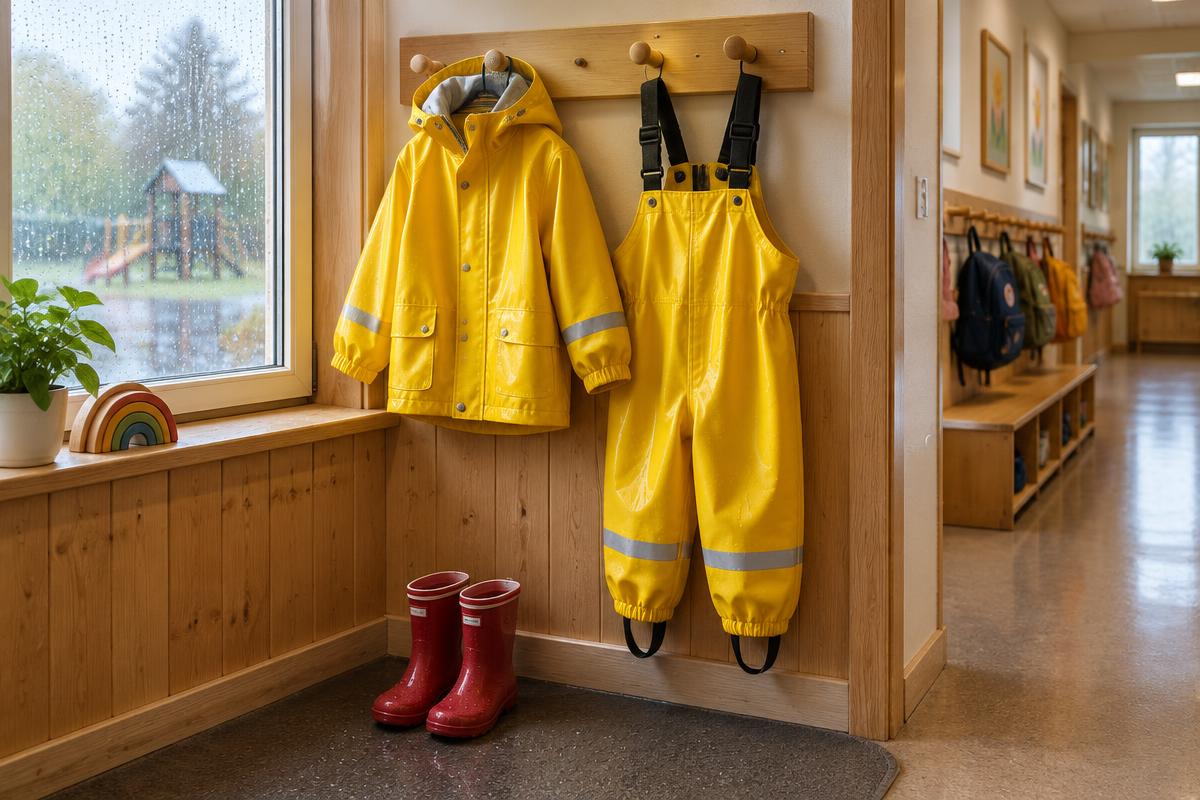
*Rain, rain, go away, come again another day…*
A familiar rhyme. Swedish weather does not always cooperate.
If you have moved to Sweden from a warmer or drier country, children's rainwear can be surprisingly confusing. You may reasonably assume that a waterproof jacket and a pair of boots will do the job.
Then you hear galonbyxor. A shop suggests skalbyxor. You discover lined and unlined rubber boots, waterproof mittens, one-piece rain overalls and rain hats with unusually long backs — and suddenly dressing a child for rain feels like another Swedish vocabulary list.
The good news: the system becomes much easier once you separate three things — waterproofing, breathability and warmth. They are not the same thing.
Rainwear at a glance
| 🌧️ Galon | 🌬️ Shell / skal | 🧒 Overall | |
|---|---|---|---|
| What it is | Coated rainwear for very wet conditions | Waterproof outerwear that also breathes | One-piece rainwear or shell |
| Best for | Puddles, mud and wet sand | Active children, changing weather | Younger children |
| Good to know | Easy to wipe clean | Check water column and taped seams | Lined, unlined or removable lining |
And then you still need to think about boots, mittens and head protection. Let's translate the terminology.
What is galon?
Galon is one of those words you may never have heard before moving to Sweden. In everyday Swedish it is used for the smooth coated rainwear children wear at preschool: rain jackets, bib trousers and rain sets designed for properly wet play.
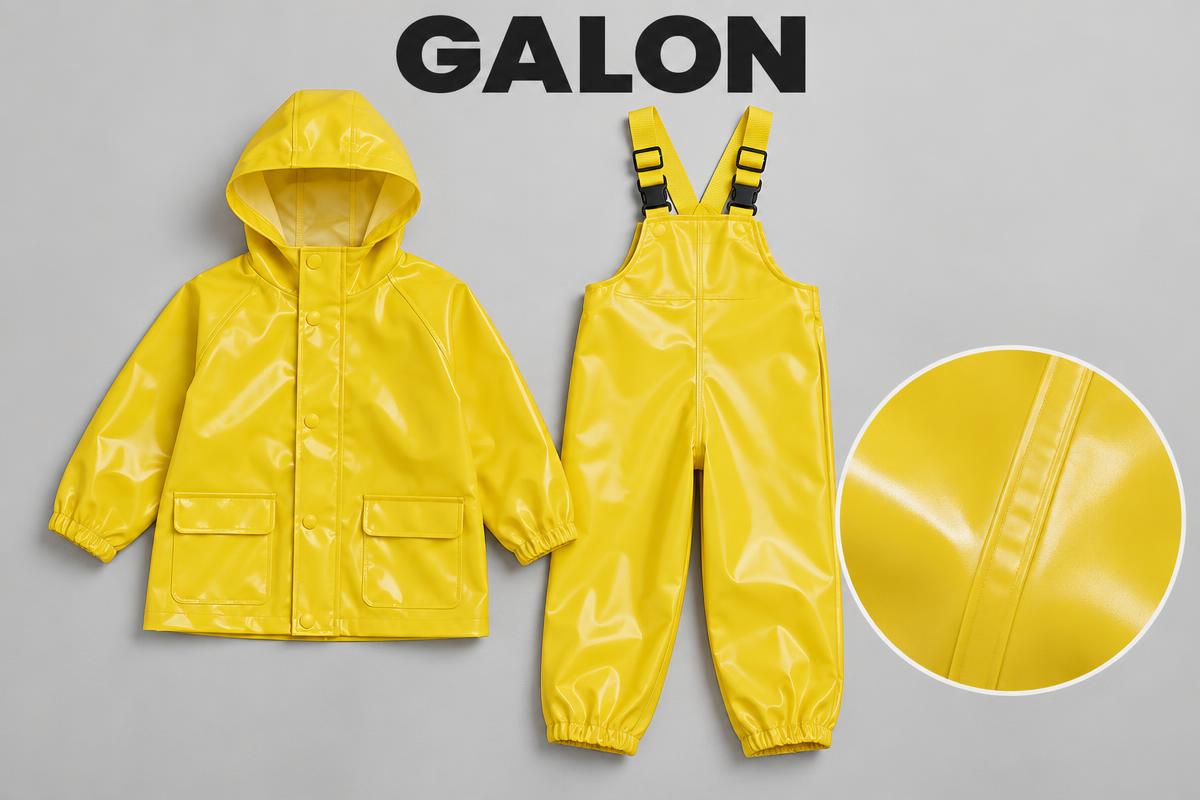
This is what galon looks like: a shiny, rubbery coated fabric with welded seams that wipes clean. If a garment's surface looks glossy like this, it is galon. A matte, soft "technical" fabric is shell — not galon.
Technically, Galon® is a trademark owned by the Swedish outerwear company Didriksons. Didriksons describes its Galon® as PU (polyurethane) coated fabric with welded seams, with a water-column rating of 5,000–8,000 mm, designed to be fully waterproof. The word *galon* is also used more generally for this type of coated rainwear.
Its appeal is obvious once you watch small children in rain. They do not simply walk through it. They sit in wet sand, kneel beside puddles — and sometimes sit in the puddle. Coated rainwear is made for exactly that, and it is easy to wipe clean.
The trade-off is breathability: Galon® does not let water vapour through the way breathable shell garments can.
What are skaljacka and skalbyxor?
Skaljacka means shell jacket and skalbyxor means shell trousers. A good waterproof shell protects against rain and wind while letting moisture from an active child escape. That breathability is the big difference.
For example, Polarn O. Pyret's WeatherPRO shell garments specify at least 12,000 mm water column, fully taped seams and breathability of at least 7,000 g/m²/24h. Kappahl similarly distinguishes coated rainwear from breathable shell garments, noting that shell clothes suit active play.
Galon vs shell: which one should you choose?
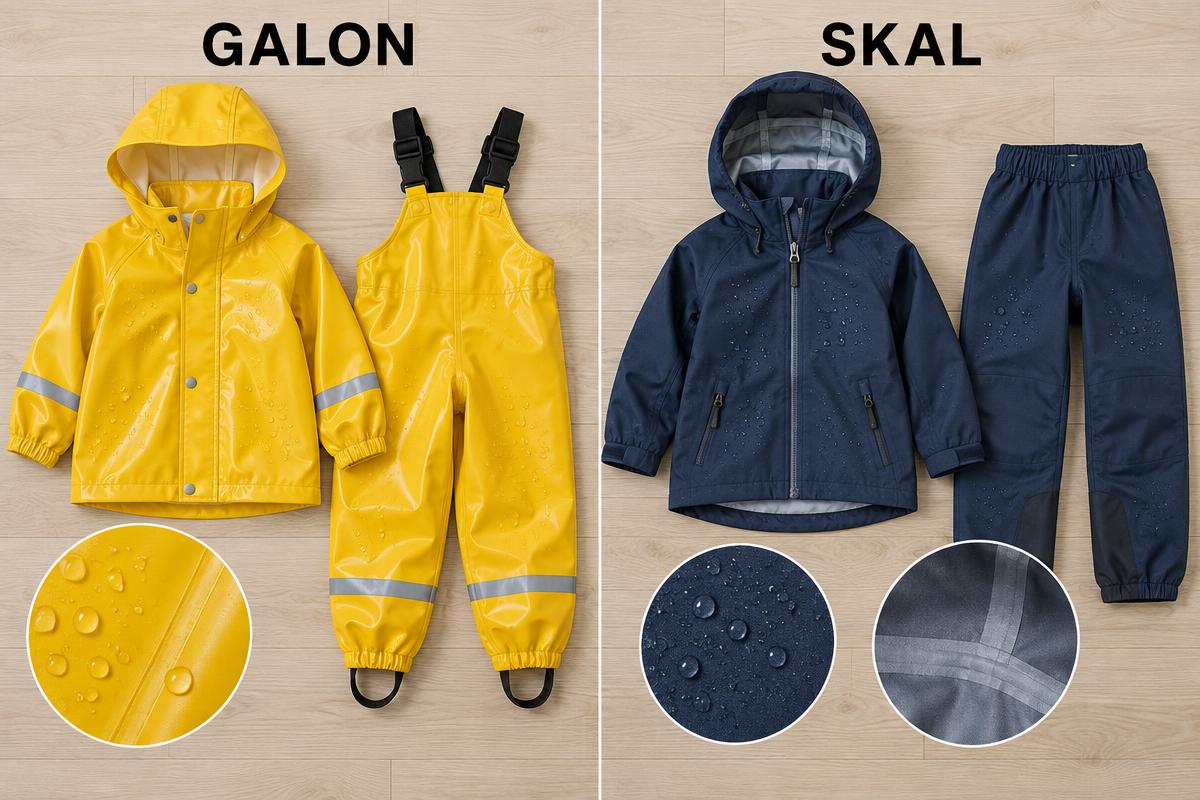
How to tell them apart in the shop
| 🌧️ Galon | 🌬️ Skal (shell) | |
|---|---|---|
| Looks like | Shiny, smooth, rubbery | Matte, like normal fabric |
| Feels like | Stiffer, a bit plastic | Soft and flexible, rustles slightly |
| Inside | Same smooth coating, or a fleece lining | Thin membrane with tape over every seam |
| Seams | Welded — no stitch holes | Stitched and then taped |
| Breathes? | No | Yes |
| Typical water column | About 5,000–8,000 mm | Often 10,000–12,000 mm or more |
| Wins at | Sitting in puddles, mud, sandpit | Running, climbing, long days outside |
There is no universal winner — they have different strengths.
| Galon-style rainwear | Waterproof shell clothing |
|---|---|
| Excellent for very wet surfaces | Better breathability |
| Puddles, mud and wet sand | Running, climbing and active play |
| Easy to wipe clean | More versatile in changing weather |
| Often welded seams | Often taped seams |
| Lower breathability | Manages moisture better |
For a child who spends an hour sitting, digging and splashing in a wet playground, coated rainwear is extremely practical. For a child running, cycling and climbing for longer, breathable shell clothing may be more comfortable.
What about one-piece rain overalls?
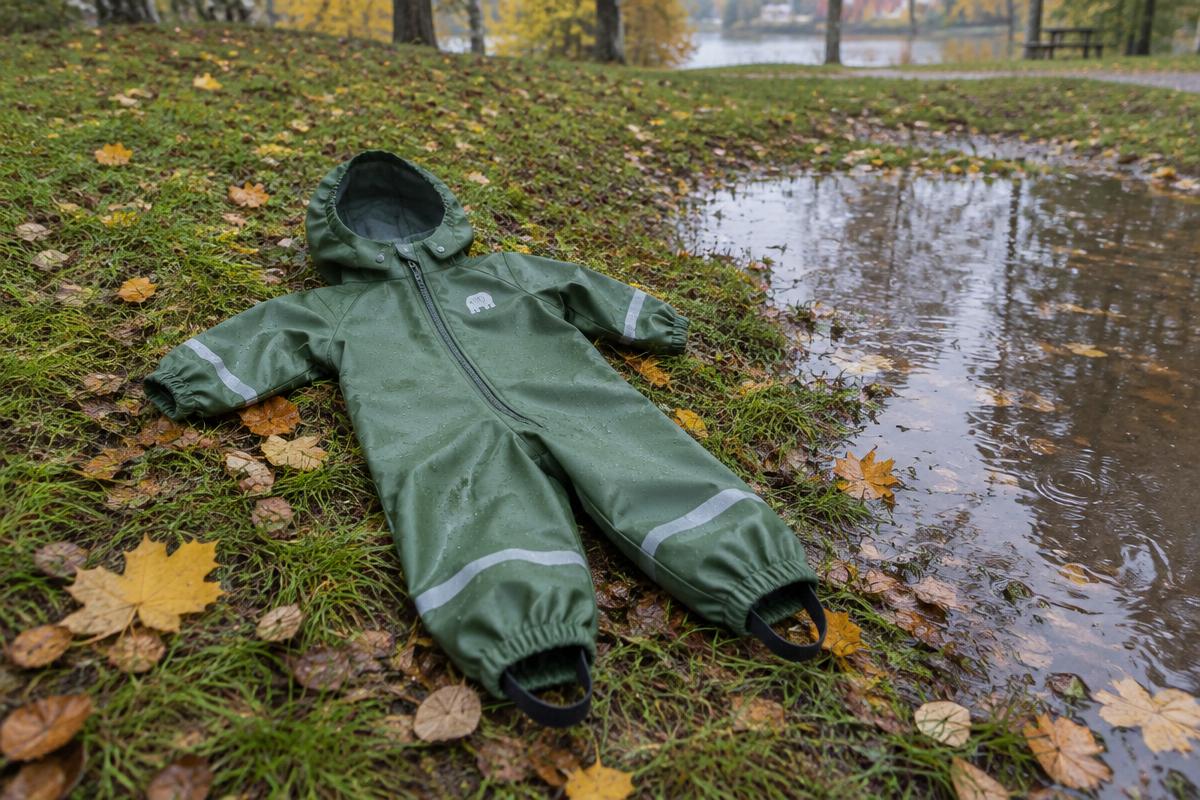
For babies, toddlers and younger preschool children, a one-piece waterproof overall can be extremely practical. There is no jacket-trouser gap at the waist when the child crouches, crawls or sits on wet ground.
One-piece overalls come in the same two types as the clothes above — and Swedish uses the same words:
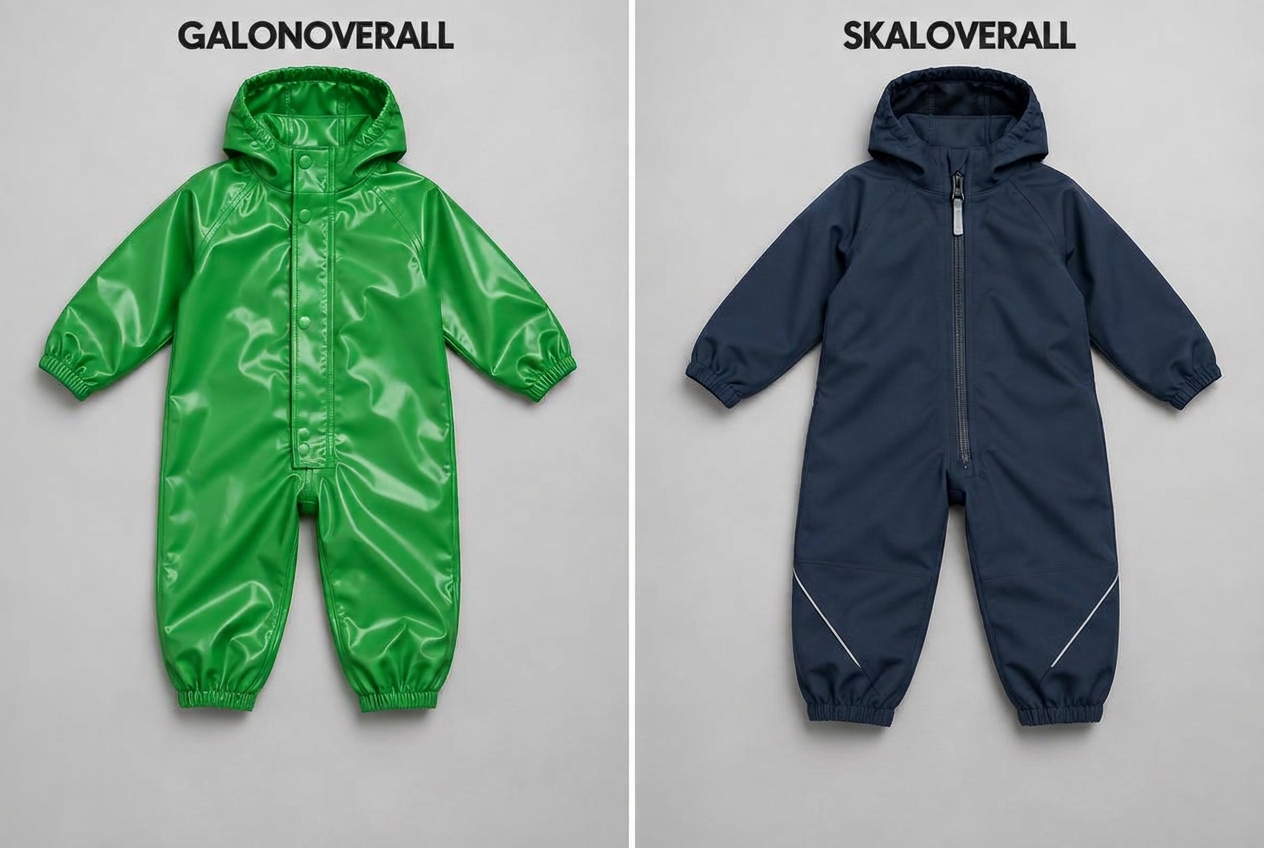
Skaloverall — shell overall
A one-piece version of a shell jacket and trousers: matte, soft technical fabric that breathes. Reima, for example, sells shell overalls with water-column ratings above 10,000 mm, fully taped seams and high breathability for active play.
Galonoverall — coated rain overall
A one-piece version of galon: shiny, coated fabric with welded seams, made for sitting in puddles and slush. These also come lined: Reima offers a lightly insulated rain overall for cold rain and slush.
How to tell them apart in the shop
| 🌧️ Galonoverall | 🌬️ Skaloverall | |
|---|---|---|
| Looks like | Shiny, smooth, rubbery | Matte, like normal fabric |
| Feels like | Stiffer, a bit plastic | Soft, stretches a little |
| Seams | Welded — no stitch holes | Stitched and then taped |
| Breathes? | No | Yes |
| Best for | Puddles, slush, digging | Running, cycling, active play |
Removable linings
Some overalls — both kinds — are 2-in-1 models with a removable lining. The lining is a soft fleece overall that zips or press-studs into the shell, so the same garment works on a mild September morning and a cold wet October day. Polarn O. Pyret, for example, offers a 2-in-1 shell overall with a removable fleece lining — wear the outer alone on milder days and add the lining when it gets colder.
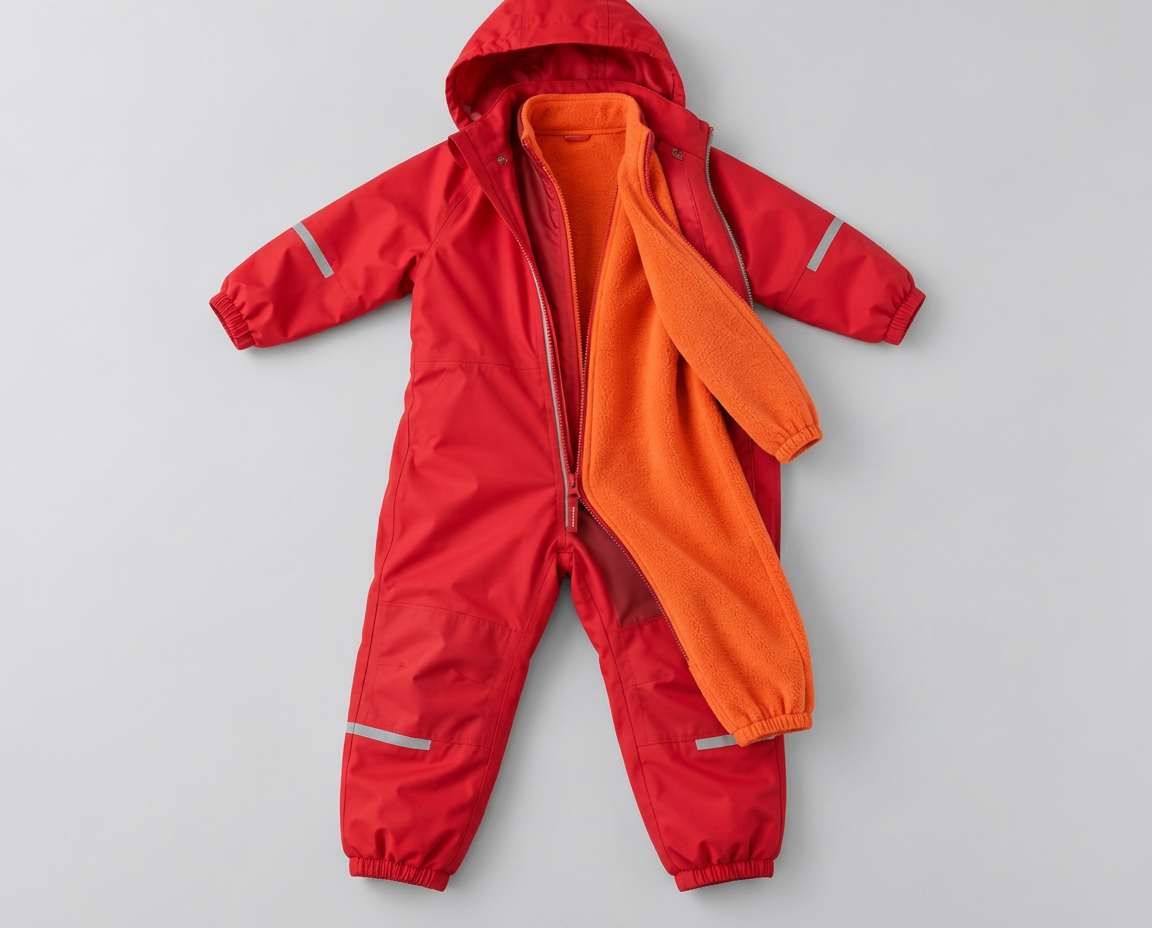
How to check in the shop: open the overall and look inside. A removable lining has a zipper or press-studs around its edge and comes out as its own soft overall. A fixed lining is sewn into the seams and cannot be taken out. "Fodrad" (lined) on the label does not mean the lining comes out.
Fodrad or ofodrad: lined or unlined?
Two Swedish words worth remembering: fodrad = lined and ofodrad = unlined. You will see them on rainwear, overalls, mittens and boots.
The difference is about warmth, not waterproofing. Kappahl, for example, sells fleece-lined galon rain trousers with an 8,000 mm water column and welded seams, alongside unlined versions.
Rain boots, mittens and hats
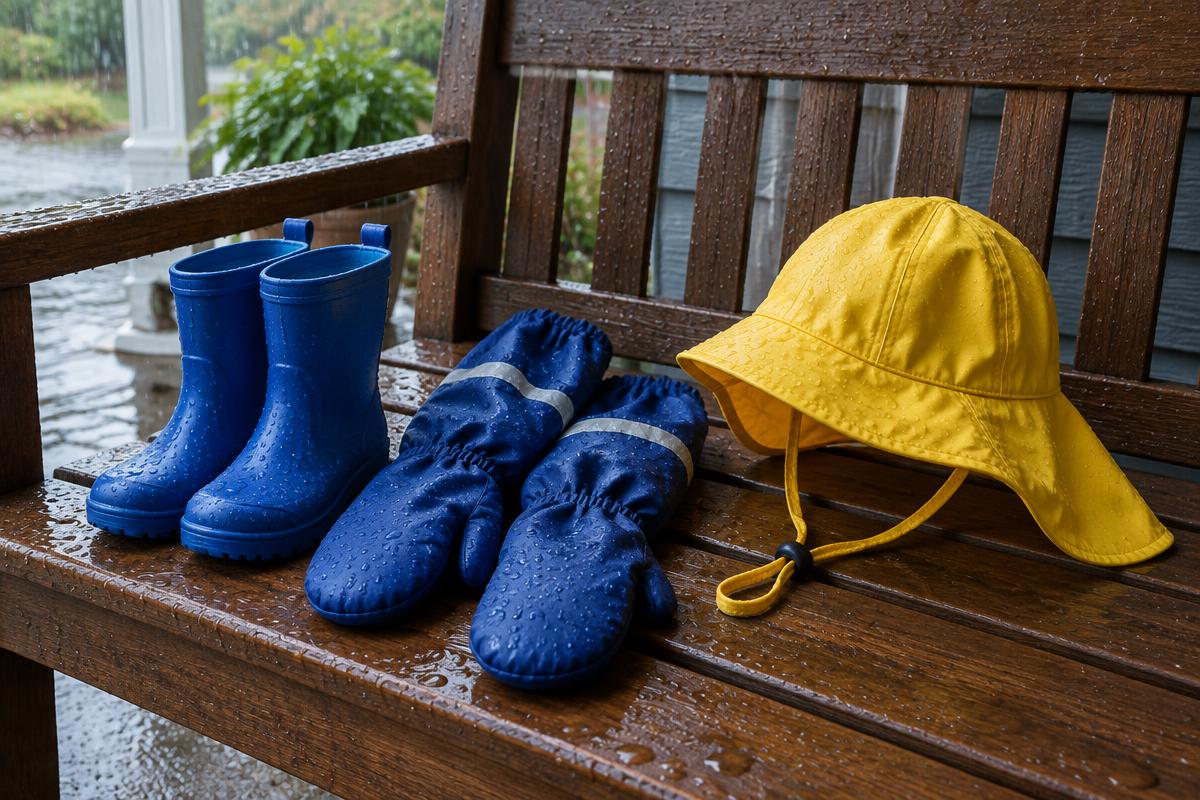
Gummistövlar — rubber boots
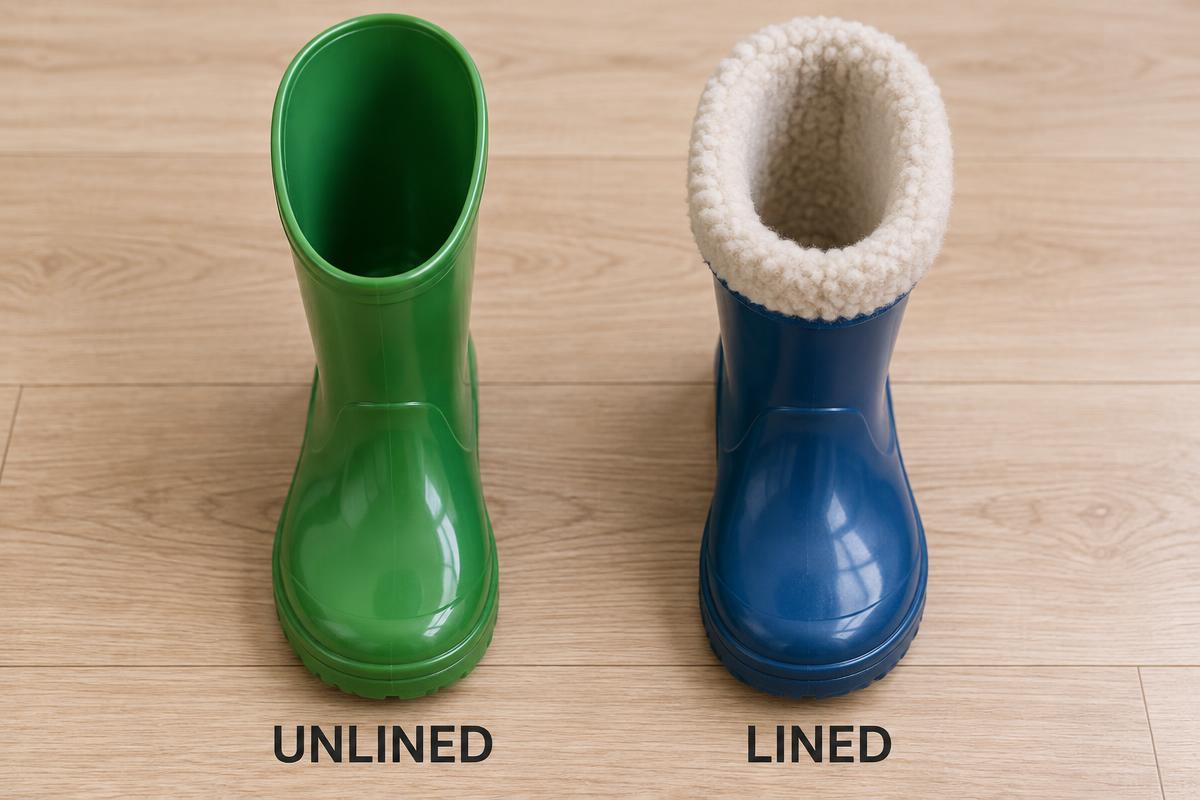
| Unlined (ofodrad) | Lined (fodrad) | |
|---|---|---|
| Inside | Bare rubber | Wool, fleece or felt lining |
| Best for | Mild rain, roughly above +5 °C | Cold rain and slush, around 0 to +5 °C |
| Warmth | Add wool socks for more warmth | Built in |
| Drying | Fast | Slower: take out the insole/liner if you can |
| Sizing | Leave room for socks | Can feel snug, so try on with socks |
Unlined rubber boots suit milder wet weather; adjust warmth with socks if there is room in the boot. Lined rubber boots add insulation for cooler wet days. Tretorn, for example, sells both. Again: lining adds warmth — not extra waterproofing.
Also check: grip · flexibility · heel fit · weight · removable insoles. A removable insole makes drying much easier.
Regnvantar — rain mittens
They can seem unnecessary until you watch a preschooler play: wet sand, buckets, leaves, mud, puddles. Hands go straight into all of them.
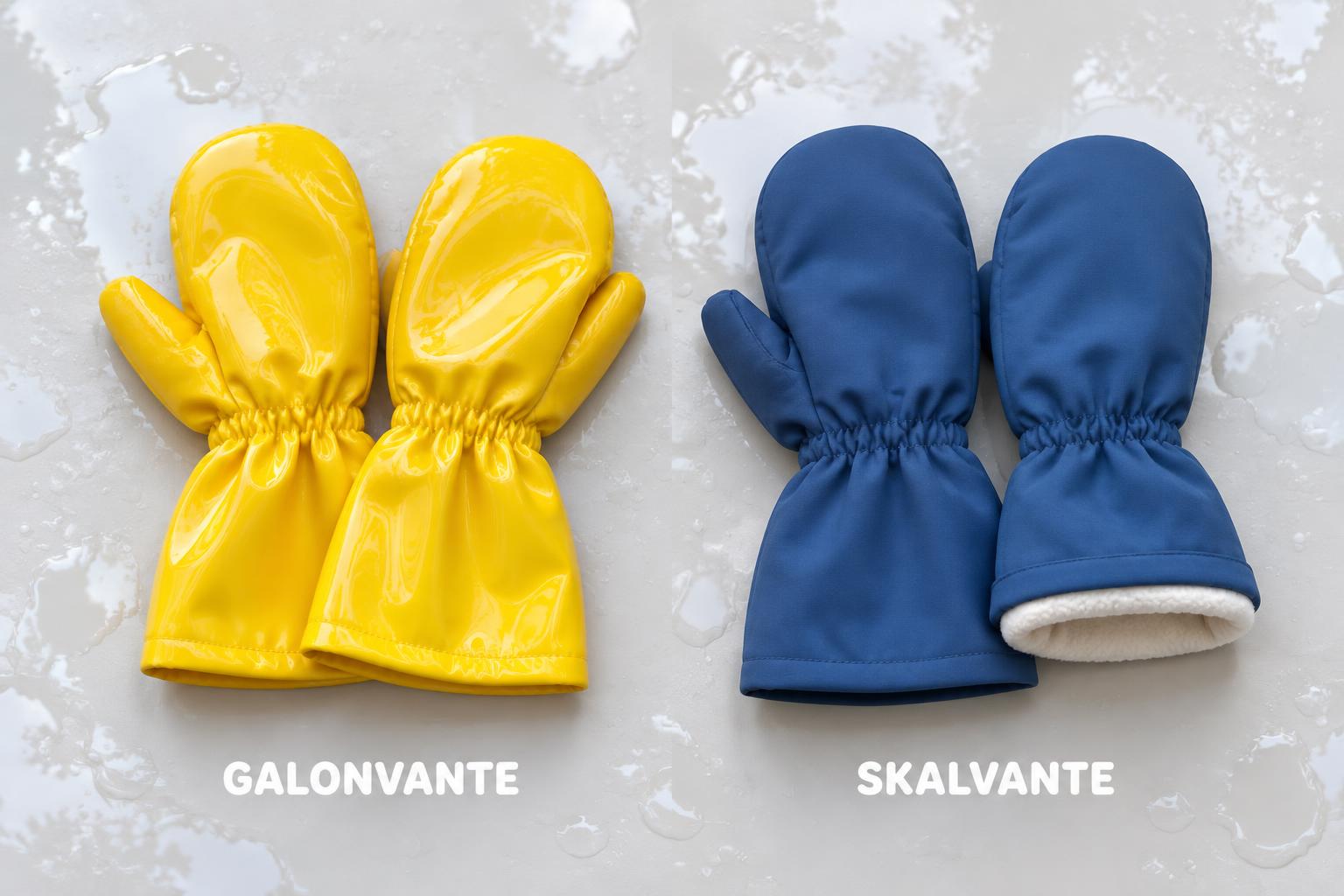
There are two main types of rain mitten, and the difference is the same as for jackets: coated material versus shell textile.
| Galon mittens | Shell mittens (skalvantar) | |
|---|---|---|
| Surface | Glossy coated material | Matte, soft shell textile |
| Inside | Thin cotton lining | Fleece lining |
| Warmth | Mild rain, roughly above +5 °C | Cooler days and cold rain |
| On the hand | Stiff, easy to wipe clean | Flexible, moves better |
| Drying | Fast | Slower: turn inside out |
| Also called | Regnvanter i galon | Skalvantar, fleece-lined mittens |
Galon mittens are the classic shiny pair — waterproof, wipeable and inexpensive, best for mild wet weather. Shell mittens are softer and warmer thanks to the fleece lining, and work better for cold autumn rain. Again: the lining adds warmth — not extra waterproofing.
One more thing to check: the shape. Most children's rain mittens are lappte (mitten-style, no separate fingers) — warmer and much easier to pull on than five-finger gloves. Almost all waterproof children's mittens in Swedish shops, from Reima to Tretorn, are lappte.
And they come in two cuff lengths:
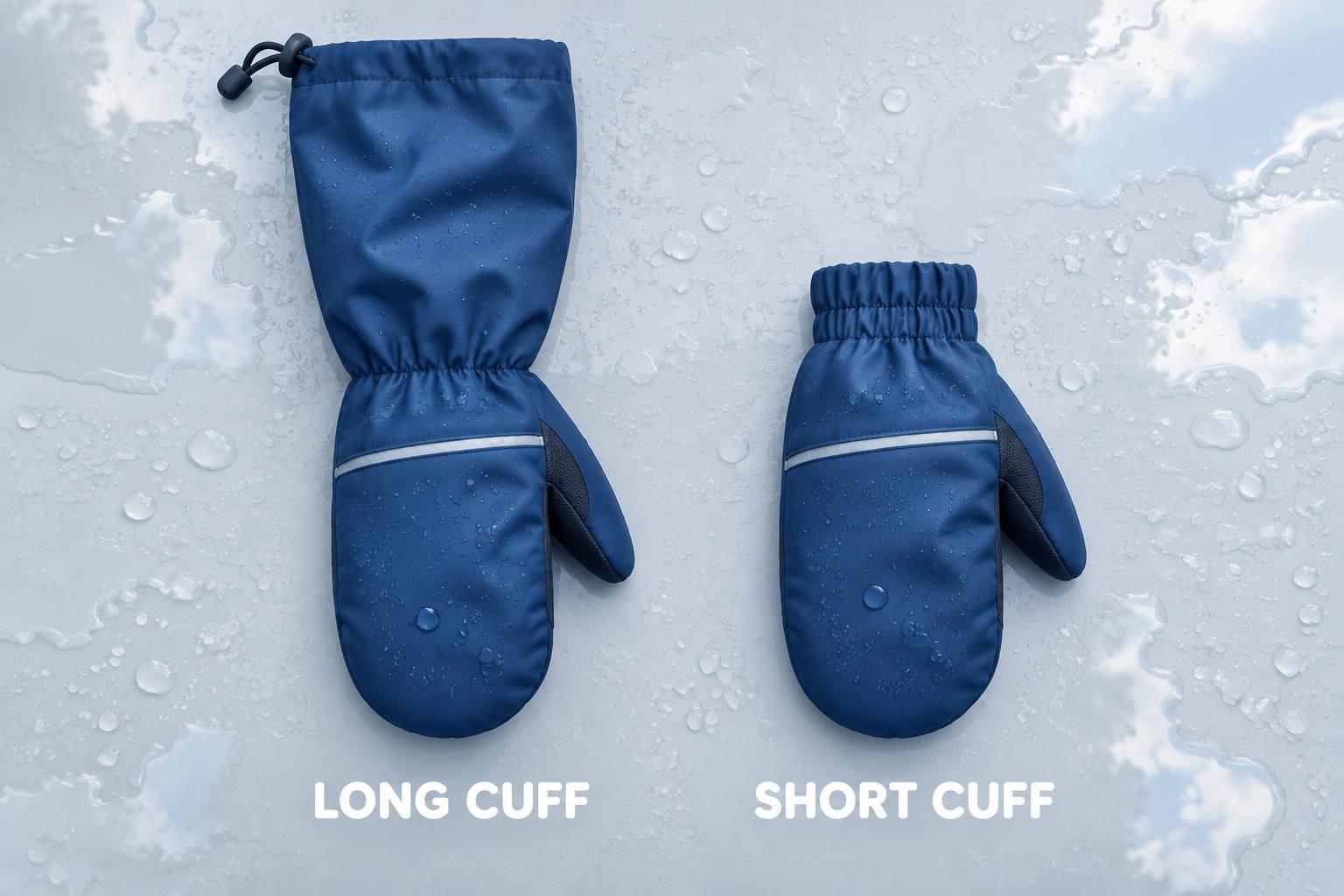
| Long cuff | Short cuff | |
|---|---|---|
| Wrist seal | Covers the forearm, tightens with a toggle | Snug elastic only |
| Water | Runs off over the jacket sleeve | Can sneak in at the wrist gap |
| On and off | Slightly more fiddly | Quicker for older kids |
| Best for | Preschool and deep puddle work | Older kids, worn over the jacket cuff |
Sydväst — the rain hat
A sydväst or regnhatt is a waterproof rain hat. A hood works, but a good rain hat gives more freedom of movement and protects the sides of the face and neck.
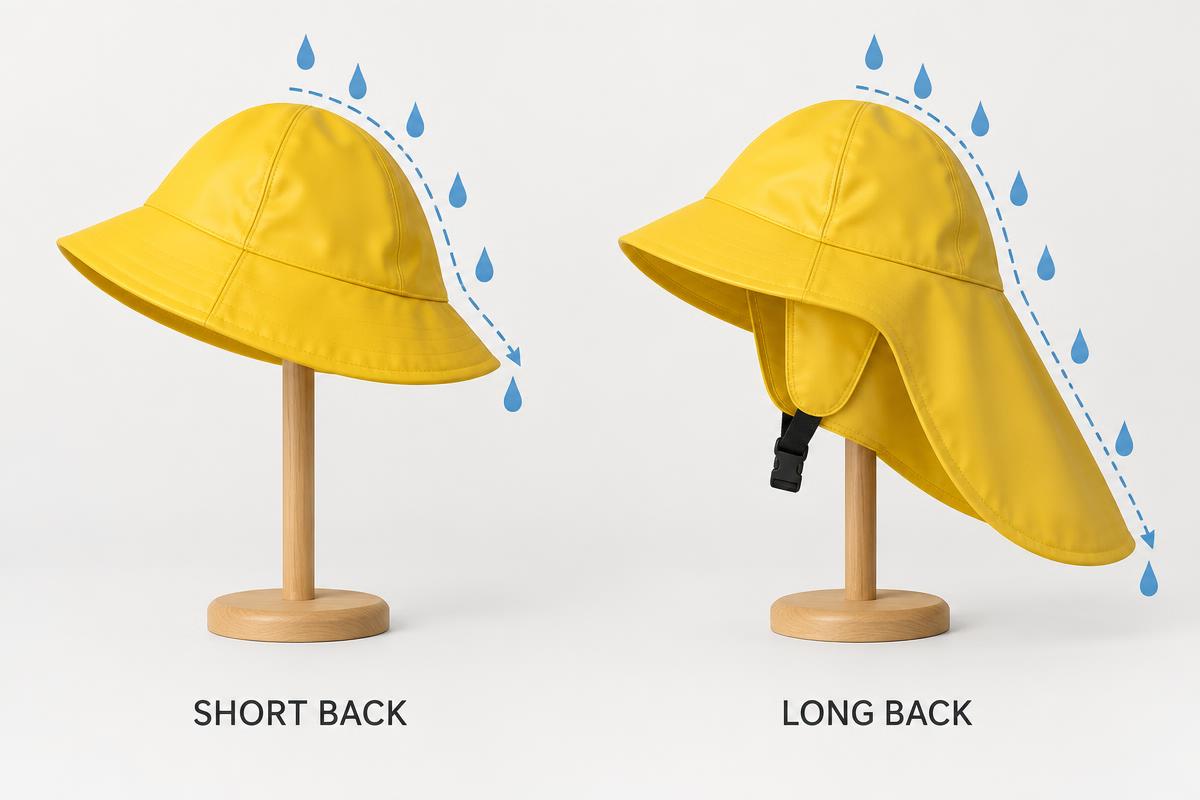
| Short back | Long back (classic sydväst) | |
|---|---|---|
| Neck | Rain drips onto the neck and inside the collar | Flap covers the neck and sheds water over the jacket |
| Ears | Usually open | Often covered by ear flaps |
| Stays on | Can blow off | Chin strap keeps it in place |
| Best for | Light showers, short walks | Real rain, long preschool days outside |
Check: face coverage · ears · neck coverage · chin strap.
What does vattenpelare mean?
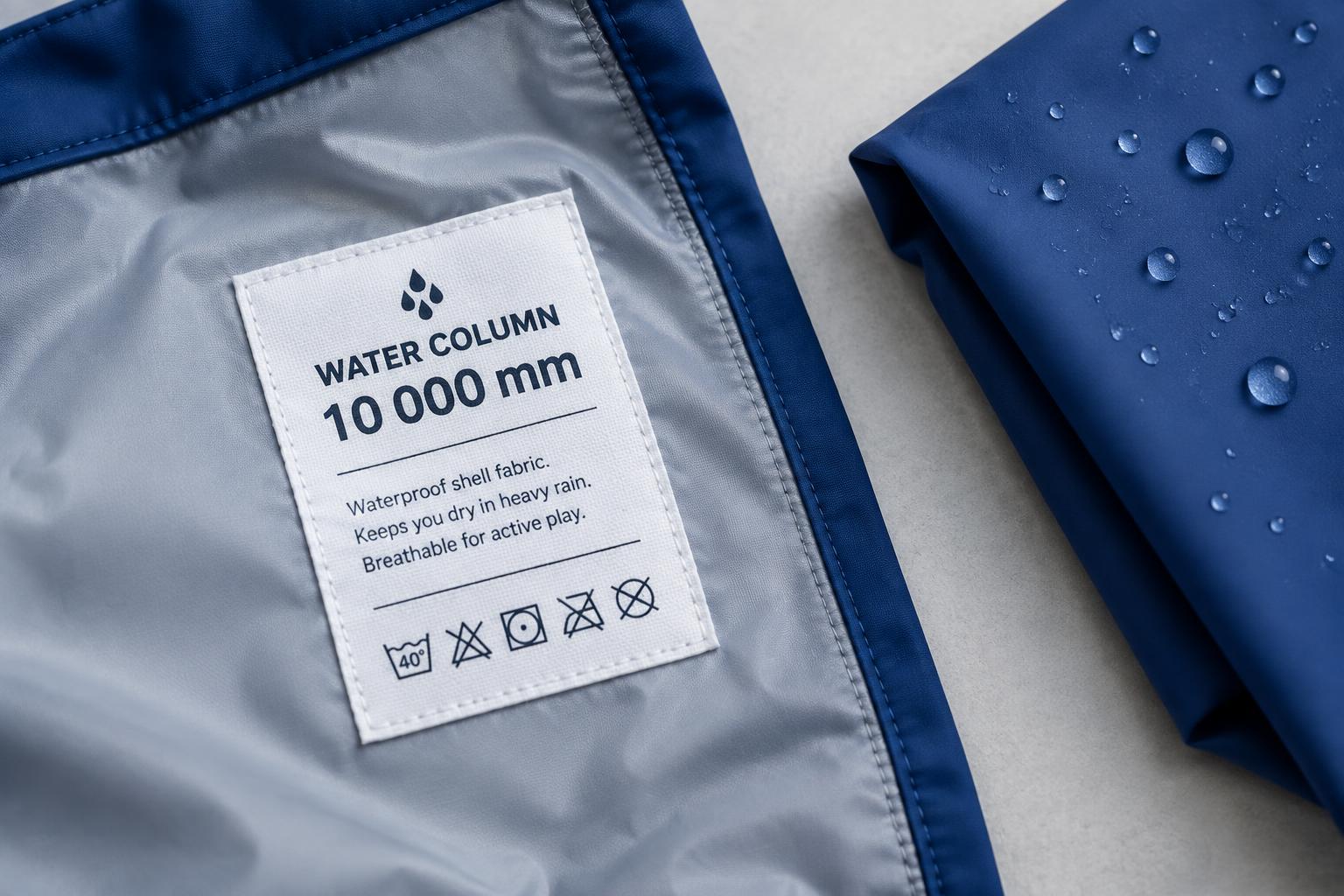
You will often see numbers such as 5,000 · 8,000 · 10,000 · 12,000 mm. This is the vattenpelare — water-column rating: a lab measurement of how much water pressure the material withstands before water gets through. A higher number generally means more resistance.
Not every "waterproof" label means the same thing. Two jackets can both say waterproof and behave very differently in a puddle. Check the mm figure on the label before you buy:
- Below ~3,000 mm: resists light drizzle, but a child kneeling in wet grass will soak through
- 5,000–10,000 mm: everyday preschool rainwear — fine for playing and walking in real rain
- 10,000 mm and above: heavy rain, sitting and kneeling in puddles, long days outdoors
But seams matter too. Stitching creates tiny needle holes, so waterproof garments use taped seams, while coated materials such as Galon® can use welded seams with no stitch holes at all.
What should my child wear when it rains?
There is no perfect chart for every child — activity level, time outside and how warm they run all matter. But this is a useful starting point:
| Conditions | Practical starting point |
|---|---|
| Mild, light rain, active child | Breathable waterproof shell |
| Mild, heavy rain or puddle play | Unlined coated rainwear + rubber boots |
| Cool and rainy | Normal clothes + mid-layer + waterproof outer layer |
| Cool and very wet | Warm layer + galon or shell + suitable boots |
| Young child close to wet ground | One-piece waterproof overall |
What should stay at preschool?
Ask your preschool first — requirements vary. A practical wet-weather setup could be:
| Rain essentials | Useful backups |
|---|---|
| Waterproof jacket + trousers, or overall | Spare trousers |
| Rubber boots | Spare socks |
| Rain mittens when needed | Spare top |
| Rain hat or good hood | Spare underwear |
| Warm layer for cooler days | Extra mittens |
Do you need two pairs of boots? No. But some families keep one pair at preschool and one at home, because wet footwear does not always dry in time. A sensible approach: one main pair + one second-hand backup pair. Convenience, not a requirement.
Rain gear is often worth buying second-hand
Children grow quickly, and a rain set is often outgrown long before it is worn out. Second-hand is especially good for preschool backups, spare boots, an extra set for grandparents and fast-growing toddlers.
Inspect waterproof items more carefully than an ordinary sweatshirt:
- Rainwear: check knees, seat, seams, foot straps and the coating for cracks or peeling.
- Rubber boots: bend the rubber gently and look for cracks around flex points and the sole.
- Shell clothing: inspect the fabric and the taped seams.
Wet boots again? Meet the skotork
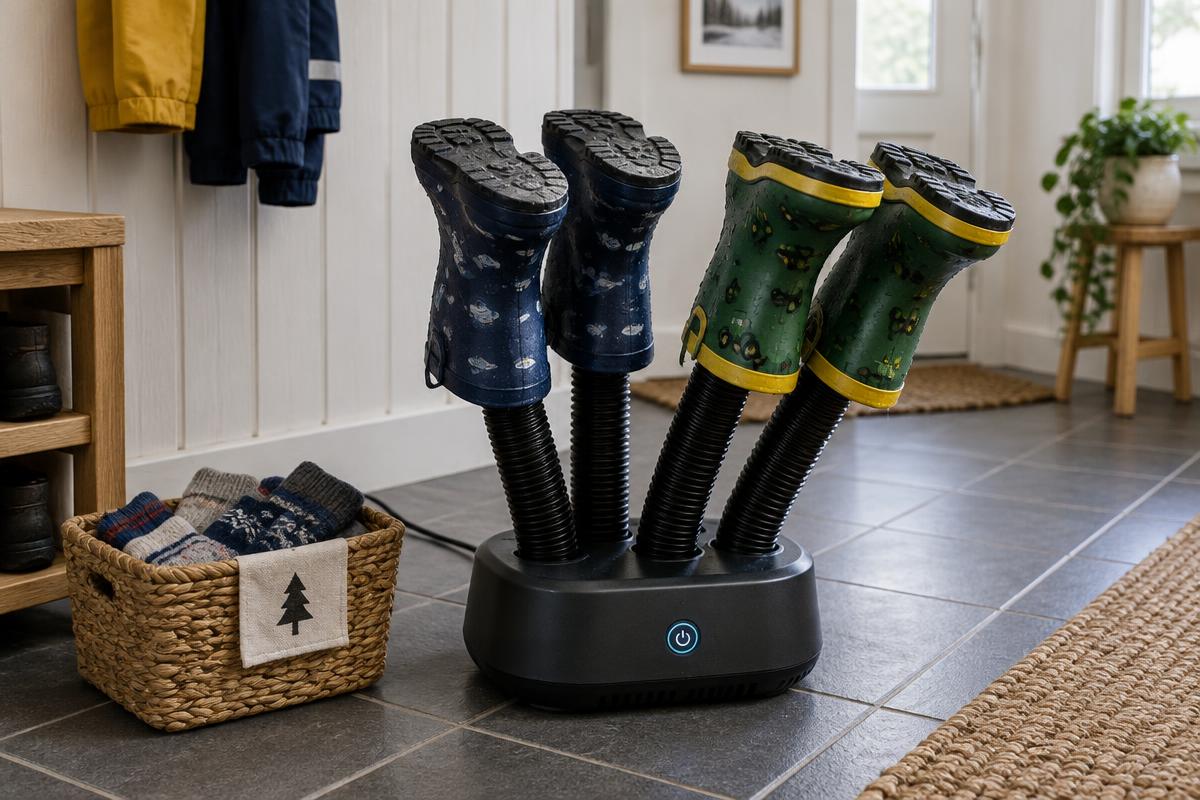
Another useful word: skotork — shoe dryer. It blows warm air into shoes or boots through hoses. Models sold in Sweden can dry several boots at once and may have a timer, temperature settings and attachments for mittens. When tomorrow's boots are still today's wet boots, it is genuinely useful.
And don't put galon in a hot drying cabinet
Galon is easy to care for: Didriksons says it often only needs wiping with a damp cloth, and turning it inside out helps it dry faster. But Galon® is sensitive to high heat — Didriksons advises against a tumble dryer or heated drying cabinet (torkskåp), which are common in Swedish preschools and homes. For any waterproof garment: check the care label first.
Which rainwear brands will you see in Sweden?
You do not need a particular logo to keep a child dry, but these are brands you are likely to meet. They are examples, not a ranking — product specifications matter more than the name.
- Didriksons: Swedish outerwear company closely associated with Galon®.
- Polarn O. Pyret (PO.P): technical children's shell clothing and overalls, some with removable linings.
- Reima: Finnish brand with rainwear, shell clothing, overalls and rain mittens.
- Tretorn: Swedish brand best known for rubber boots and rain accessories.
- Kaxs by Kappahl: coated and fleece-lined rainwear, shell clothing, rain mittens and sydväst hats.
Before you buy: the rainwear checklist
- Is it actually waterproof? Check the description rather than assuming.
- Are the seams taped or welded?
- Is it lined or unlined?
- Does my child need breathability for active play?
- Can they move comfortably and fit layers underneath?
- Does the boot fit securely without being tight?
- Will water get in at the wrists, neck or ankles?
- How does the manufacturer say it should be dried?
- Do we actually need this, or do we already have something that does the same job?
The Swedish rainwear system, translated
| Swedish | What it means |
|---|---|
| Galon | Coated waterproof rainwear for seriously wet play |
| Skal | Breathable waterproof shell clothing |
| Skaloverall / regnoverall | One-piece option, great for younger children |
| Fodrad / ofodrad | Lined (warmer) / unlined |
| Gummistövlar | Rubber boots |
| Regnvantar | Waterproof mittens for hands that find puddles |
| Sydväst | Rain hat, ideally with good neck coverage |
| Vattenpelare | Water-column rating |
| Torkskåp / skotork | Drying cabinet / shoe dryer |
Swedish rainwear looks complicated the first time. But the logic is simple: keep the water out, add warmth only when needed, and let active children breathe.
*Rain, rain, go away?* Perhaps. But until then, at least galonbyxor no longer needs translating.
Sources
- Didriksons — What is Galon®? Galon® construction, waterproofing, water column, breathability, care, and taped vs welded seams.
- Polarn O. Pyret — WeatherPRO shell clothing and 2-in-1 shell overall Shell specifications, taped seams, breathability and removable linings.
- Kappahl — Children's rainwear guide and Kaxs range Coated vs shell rainwear, fleece-lined rain trousers, rain mittens and sydväst.
- Reima — Shell overall, lined rain overall and rain mittens Examples of one-piece shell and coated rain overalls.
- Tretorn — Children's rubber boots and rain mittens Lined and unlined boots and rubber-boot care.
- Clas Ohlson — Skotork Example of a multi-shoe dryer with timer and temperature settings.
Information checked 29 September 2026. Product specifications and ranges change. Always check the current product description, care label and your preschool's own clothing list.