You Don’t Have to Fix Every Hard Day
When work is hard, you miss home and parenting still continues, not every difficult day needs to be fixed. A gentle reflection for parents going through a hard season.

Some seasons of life are simply hard.
Not dramatic. Not inspirational. Not a lesson you are immediately grateful for.
Just hard.
Work may be hurting you. You may feel disappointed, exhausted or uncertain about what comes next. You may miss home in a way that suddenly feels physical — the streets you know, the language you do not have to think about, the people who knew you before this version of your life.
And then, in the middle of all of that, you are still a parent.
Your child still wants breakfast.
They still want to show you the same toy for the fifth time.
They still want you to sit next to them, answer a question, read a book, find the missing sock.
And you may quietly think:
I barely have enough energy for myself. How am I supposed to give energy to someone else?
Maybe the answer is: you do not always have to.
Maybe we are trying too hard to fix every difficult feeling
There is a lot of pressure around parenting to be present, positive, engaged and emotionally available.
All good things.
But sometimes that turns into another demand:
*I am struggling, therefore I need to fix myself quickly so my child does not notice.*
What if you cannot?
What if today is simply a sad day?
What if you miss home?
What if work has taken more out of you than you expected?
Maybe not every difficult feeling needs to be turned into a solution by bedtime.
Sometimes the situation is what it is. And accepting that may be kinder than fighting it all day.

Your child does not need a performance
Children need love, safety and connection.
They do not need an entertainer.
You do not have to create a magical afternoon because you had a terrible morning. You do not have to bake, craft, organise an educational activity and smile through dinner.
On a difficult day, connection can look very ordinary. It can be:
- lying together on the sofa
- sharing a simple dinner
- walking around the block
- letting your child play next to you while you sit quietly
- reading one book
- watching something together
- saying, “I’m a little tired today, but I’m happy to be with you.”
That still counts.
Perhaps more than we realise.
It is okay for your child to see that adults have feelings
There is a difference between making a child carry an adult problem and simply allowing them to see that you are human.
You do not need to explain the meeting, the job situation, the money worry or the complicated adult details.
But you can say:
“I had a difficult day.”
Or:
“I’m feeling a little sad today.”
And then reassure them:
“You don’t need to fix it. I’m okay. I just need a quiet evening.”
That may teach something valuable too: difficult feelings exist. They pass through families. And love does not disappear when someone is having a hard day.


Homesickness can exist next to gratitude
Missing home can feel confusing when you have built a life somewhere else.
You can be grateful for your life in Sweden and still miss Istanbul.
You can love the life your child is growing up in and still miss the life that shaped you.
You can feel lucky and lonely at the same time.
None of those feelings cancel the others.
Sometimes homesickness is not really about a place. It is about ease.
Being somewhere where you understand the jokes without translating them. Knowing which street to turn down without checking a map. Being close to people who knew you before you became responsible for so many things.
Missing that does not mean you made the wrong life.
It means part of you still belongs there too.

Maybe the goal is not to feel better immediately
Some days, “What can I do to feel better?” is a useful question.
Other days, it feels like another task.
Maybe a gentler question is:
What would make today slightly easier?
Not good. Not fixed. Just easier.
Maybe that means:
- ordering dinner
- calling someone who feels like home
- cancelling something
- going to bed early
- taking your child outside for ten minutes because being indoors feels worse
- or doing absolutely nothing extra
Sometimes the most helpful thing is to stop demanding that the day become something it is not.

Hard seasons are still part of childhood
We often imagine our children's childhood as something we need to keep perfectly protected from our difficult periods.
But childhood also happens while adults change jobs, lose people, miss home, worry, recover and begin again.
What children may remember is not that every day was cheerful.
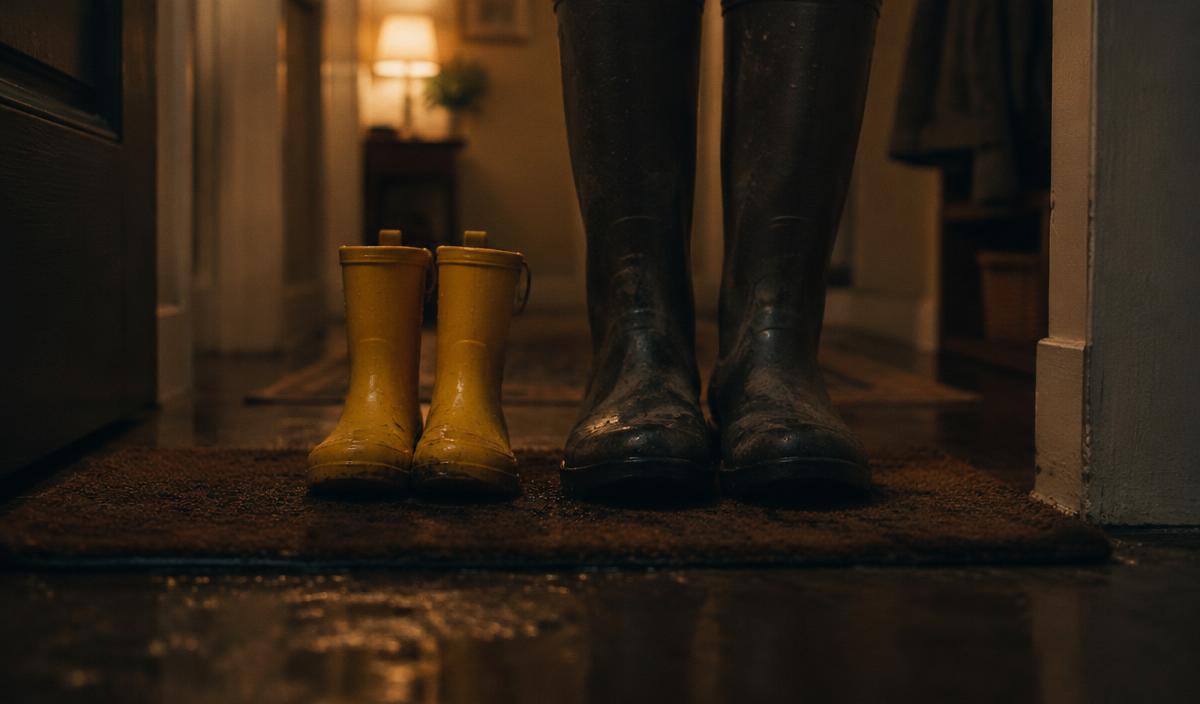
They may remember that home still felt safe. That someone hugged them. That dinner happened somehow. That you sat next to them.
That even when you were quiet, you were still there.
So what should we do?
Maybe some days there is something to do.
Ask for help. Go for a walk. Call a friend. Talk to someone. Take a break. Change something that needs changing.
And maybe on other days, there is nothing to solve.
The day is difficult. You are tired. You miss home.
And perhaps the kindest thing you can do is acknowledge that without turning it into another personal failure.
You can be having a hard time and still be a loving parent.
You can have less energy and still give your child something important.
You can miss the place you came from while building a life where you are.
And you do not have to know exactly what comes next today.
Sometimes today only needs to be lived.
Tomorrow can be dealt with tomorrow.