Born in 2022 or Later? Sweden’s New 10-Year Compulsory School Explained
Children born in 2022 will be the first cohort to start Sweden’s new Year 1 when the 10-year compulsory school begins in autumn 2028. Here’s what happens to förskoleklass, school starting age and children already in school.
If your child was born in 2022, their first year of school will look different from the system parents know today.
From autumn 2028, Sweden will introduce a 10-year grundskola — compulsory school. Children born in 2022 will start directly in Year 1 instead of attending förskoleklass — preschool class.*1
At first, that sounds like children are starting school a year earlier. They are not. And children already in school will not suddenly skip a year either.
Here is what is actually changing.
The change at a glance
Today
- Age 6 · Förskoleklass
- Age 7 · Year 1
- Final year · Year 9
From autumn 2028
- Age 6 · New Year 1
- Age 7 · New Year 2
- Final year · Year 10
The six-year-old year moves into compulsory school. Children do not start younger.
Förskoleklass will stop existing as a separate school form and will be replaced by a new Year 1 within grundskola. The final year of grundskola will therefore become Year 10.*1,*2
Why is 2022 the important birth year?
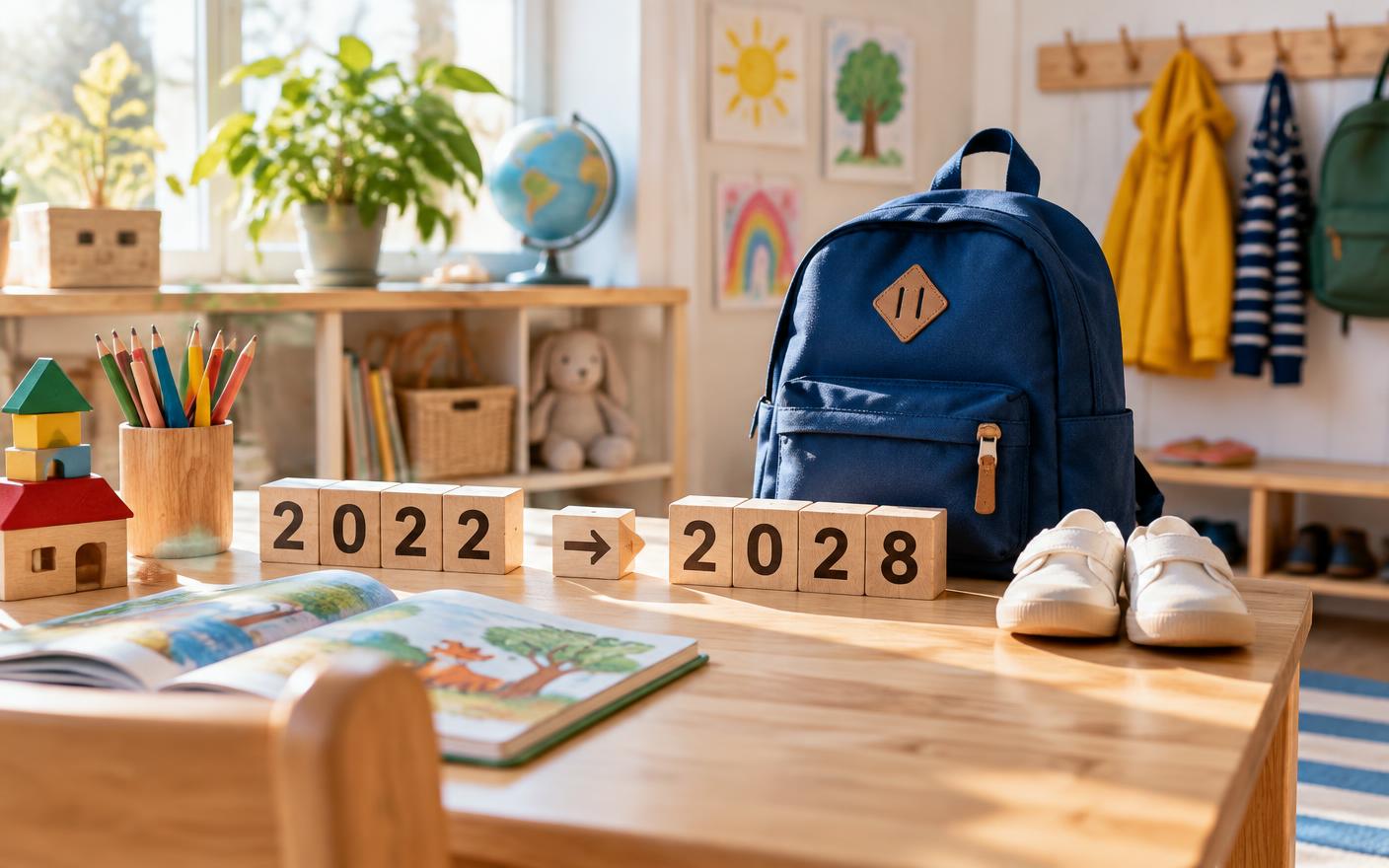
Because children born in 2022 turn six in 2028. Skolverket — the Swedish National Agency for Education — specifically states that children born in 2022 will start Year 1 instead of förskoleklass.*1
They will be the first cohort to enter the new system directly through the new Year 1. Children born later will also begin school under the new structure.
Is förskoleklass disappearing?
Yes, as a separate school form. Today, förskoleklass is the school year most children attend at age six before entering Year 1.
From autumn 2028, förskoleklass will no longer exist as its own school form. Instead, grundskola will gain a new Year 1 and expand from nine years to 10 years.*1,*2
Does this mean six-year-olds start school earlier?
Not in terms of age. Children will still normally start this stage of education in the calendar year they turn six.
The difference is what that year is called and where it sits within the school system: age six means förskoleklass today, but Year 1 of grundskola from 2028. Skolverket says that compulsory school will still finish at the same age as today.*1
What happens to children born in 2021?
Born in 2022
Born in 2021
A child born in 2021 will normally attend förskoleklass in the 2027/28 school year. When the new system begins, that child will normally enter the new Year 2 in autumn 2028.*2,*3
That may look like a skipped year on paper, but it is not. Skolverket states clearly that no pupil skips a class.*1 The child has completed a full school year; the numbers change because a new Year 1 is inserted at the beginning of grundskola.
What happens to children already in school?
Generally, their year number moves up by one when the new system begins. A pupil who would have started today’s Year 1 in autumn 2028 instead starts the new Year 2. A pupil who would have started today’s Year 7 starts the new Year 8.*1,*2
Pupils with only one or two years of compulsory school left in autumn 2028 are covered by special curriculum transition rules and will finish under the current curricula.*1
Will Year 1 just be förskoleklass with a new name?
No — although much should remain familiar. Skolverket says six-year-olds will continue learning through play, movement and creative activities. Teaching is also intended to become more structured and more consistent across Sweden, with a stronger early foundation in reading, writing and mathematics.*1
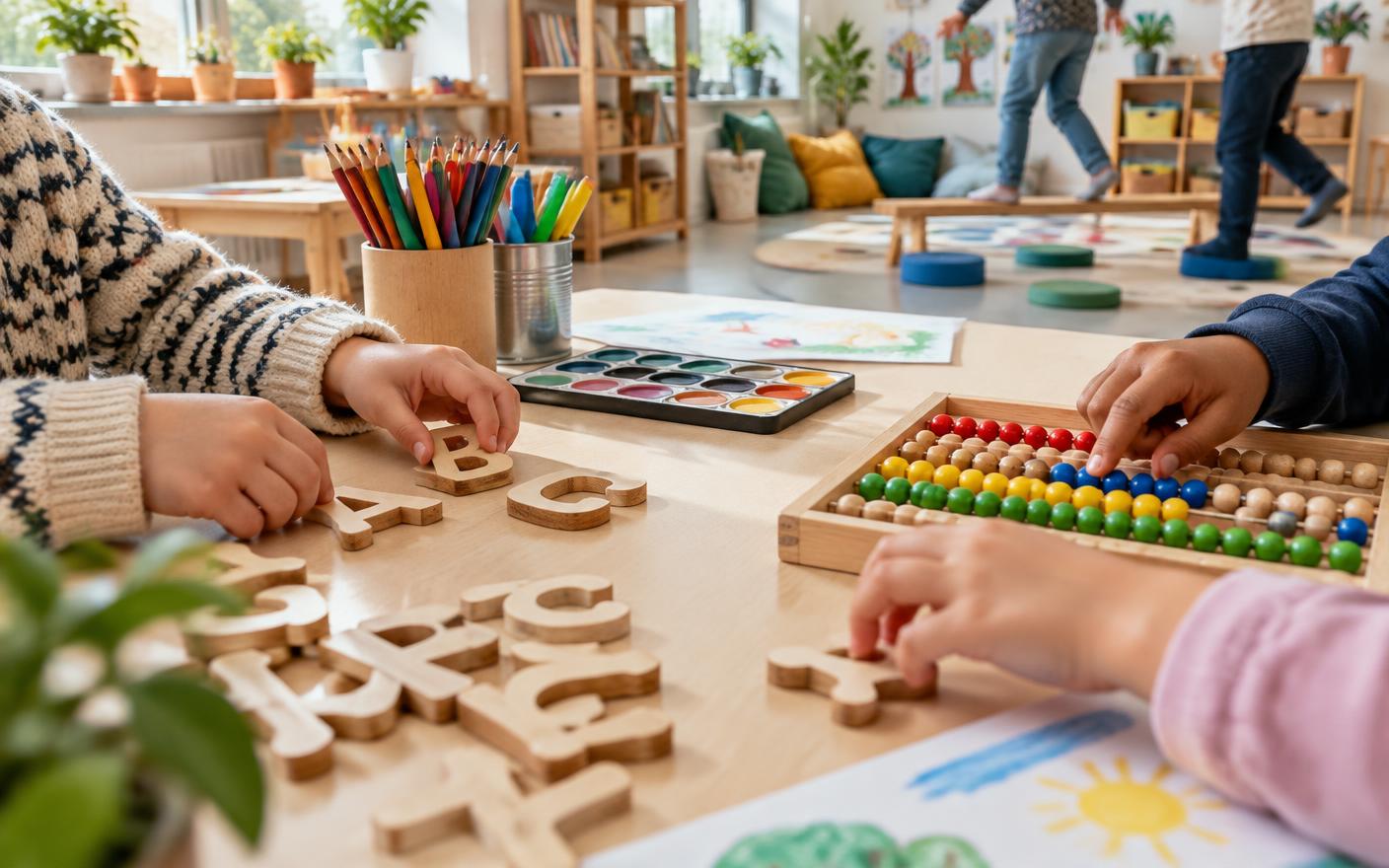
The new curricula are being designed so that teaching and subject content are adapted to children’s age and maturity.*1 The reform does not mean six-year-olds will simply be expected to behave like today’s older pupils.
How will the school stages change?
| Swedish term | English explanation | New years |
|---|---|---|
| Lågstadiet | Early stage | Years 1–4 |
| Mellanstadiet | Middle stage | Years 5–7 |
| Högstadiet | Later stage | Years 8–10 |
Today, these stages are Years 1–3, 4–6 and 7–9. From autumn 2028, each stage shifts to accommodate the new first year.*2,*3
Will children get more teaching time?
The new Year 1 adds 534 hours of guaranteed teaching time to the 10-year system.*2,*3
There is an important transition detail: pupils who enter the new Year 2 or a higher year in autumn 2028 remain covered by the older minimum-total-teaching-time rules.*3 The 534-hour increase therefore does not mean that every child already at school in 2028 automatically receives 534 extra hours.
What is decided — and what is still being prepared?
Already decided
- Grundskola becomes 10 years long from autumn 2028.*1,*2
- Förskoleklass disappears as a separate school form.*1,*2
- A new Year 1 is introduced for six-year-olds.*1,*2
- Children born in 2022 start Year 1 instead of förskoleklass.*1
- Year 10 becomes the final year of grundskola.*2
- Existing year groups are renumbered during the transition.*1,*2
Still being prepared
Skolverket is developing new läroplaner — curricula — and kursplaner — subject syllabuses — for the new system.*1,*4
As of September 2026, the latest Skolverket timetable says the proposed syllabuses are planned to go out for consultation from 9 November 2026 to 20 January 2027, with final proposals due to the government on 14 May 2027.*4
When does the change happen?
Two dates are easy to confuse. The main legislative changes formally entered into force on 1 July 2026, but the new school structure applies to education conducted after 30 June 2028.*2,*3
For families, the practical date is autumn 2028, at the start of the 2028/29 school year.
The easiest way to understand the reform
The six-year-old school year moves inside grundskola. That is the core change.
Children do not suddenly lose a year of education. They still begin this stage in the year they turn six and complete compulsory school at the same age as today. The names and structure of the years change.*1
Sources
- Skolverket — Tioårig grundskola Official explanation of the 2022 cohort, new Year 1, school-starting age, learning through play, transition and the statement that no pupil skips a class.
- Sveriges Riksdag — En tioårig grundskola The parliamentary decision to replace förskoleklass with a new Year 1 and introduce a 10-year compulsory school.
- Sveriges Riksdag — Proposition 2024/25:143 Detailed transition rules, implementation dates, stage structure and guaranteed teaching time.
- Skolverket — Kursplanerna går ut på remiss i november Current timetable for consultation and final curriculum proposals.
Information checked 20 September 2026. The structure of the 10-year compulsory school has been decided, but detailed curricula and syllabuses are still being prepared. This guide will need updating when further official decisions are published.