Head Lice at Preschool in Sweden: What Parents Actually Need to Do
Found head lice at preschool? Learn how to check with a luskam, when to treat, whether your child can attend preschool and why you do not need to deep-clean your home.
You open the preschool app and see the message: “Head lice have been found in the group.”
And immediately wonder: Do I treat my child now? Keep them home? Wash every bedsheet? Treat the whole family?
Thankfully, it is usually much simpler. Löss — head lice — are common, treatable and have nothing to do with poor hygiene. They spread mainly through direct hair-to-hair contact and cannot jump or fly.*1
The 30-second version
The 30-second guide
Check first — treat only when live lice are found
Preschool reports lice
Check your child's hair with a lice comb
You find eggs, but no live lice
Keep checking — do not treat automatically
You find live lice
Treat and follow the product instructions carefully
Someone in the family has lice
Check everyone; treat those with live lice
Treatment has worked
Your child can generally return to preschool
You are about to deep-clean the home
Stop — clean combs and brushes instead
1177 recommends using lice treatment only when live lice are found. Preventive treatment “just in case” is not recommended because its effectiveness is uncertain.*1
How do I check for lice?
Do not wait for itching. After a first infestation, itching can take four to six weeks to appear, and some children can have lice without obvious symptoms.*1
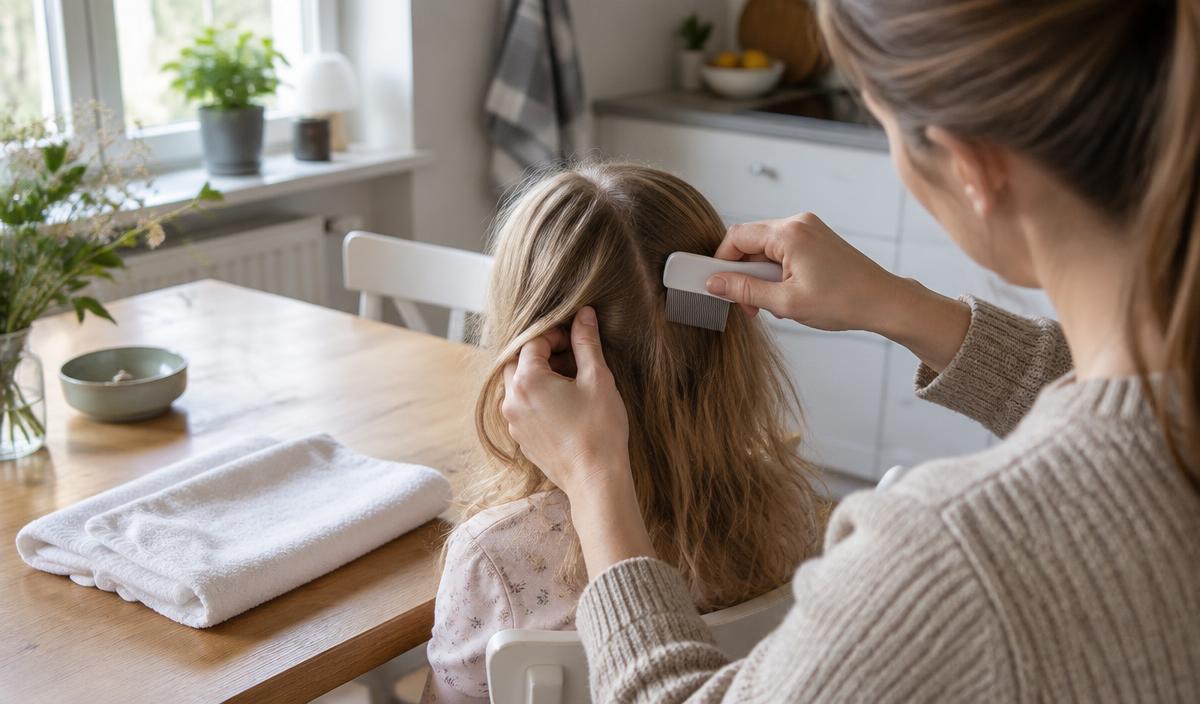
Use a luskam — a fine-toothed lice comb sold at Swedish pharmacies. Comb carefully from the scalp through the full length of the hair, preferably over white paper or another light surface so that lice are easier to see.*1
Adult lice are only around 2–3 millimetres long, so take your time. Pay particular attention to the scalp, behind the ears and at the nape of the neck.
I found eggs. Do I need to treat?
Not necessarily. Lice eggs are called gnetter in Swedish. Empty eggs can remain attached to the hair after the lice are gone.
1177 says that finding eggs does not necessarily mean there are live lice and recommends treatment when a living louse is found.*1
- Eggs only: Keep checking carefully.
- Live louse: Treat according to the product instructions.
What treatment is used in Sweden?
When live lice are found, 1177 recommends a medical-device treatment containing dimeticone — dimetikon in Swedish — as the first choice.*1
Current examples sold by Swedish pharmacies include Hedrin Once, Linicin Solution and Paranix Sensitive.*2,*3,*4 These are examples, not personal medical recommendations. Products differ in ingredients, minimum age, application time and whether a second application is required.
Do I need to treat twice?
1177's general advice for dimeticone treatment is: treat once, comb daily and repeat treatment after 9–10 days. Some eggs may survive and hatch 6–9 days later.*1
After the second treatment, continue combing daily for another week and then check at least twice during the following week.*1
Some products have different instructions — including products intended for one application or a repeat after another interval. The instructions in the package therefore take priority.
What if dimeticone does not work?
If dimeticone has been used correctly but live lice remain, 1177 says a medicine containing benzyl benzoate and disulfiram may be another option.*1 Tenutex is one such over-the-counter medicine currently sold in Sweden.*5
For a child, ask a pharmacist or healthcare professional before changing treatments. If repeated, correctly performed treatments do not work, contact BVC or a vårdcentral.*1
Can my child still go to preschool?
Usually, yes — once treatment has been completed and a lice-comb check shows that it worked. Folkhälsomyndigheten gives this guidance for returning to preschool.*6
1177 says children do not need to remain at home when treatment is being followed and the hair is combed every day. Avoid direct hair-to-hair contact until both treatments in the general treatment schedule have been completed.*1
So head lice do not automatically mean several days at home with an otherwise well child. Follow any practical instructions from your preschool as well.
Should I tell the preschool?
Yes — and there is nothing embarrassing about it. Head lice have nothing to do with cleanliness.*1
Informing the preschool lets other families check their children, so everyone with live lice can be treated. Folkhälsomyndigheten also encourages guardians to tell preschool staff when lice are found.*6
Do I need to wash the whole house?
Good news: no. Lice outside the hair quickly become weak because they cannot move properly without a hair strand to hold on to. 1177 says there is no real need to clean all bedding, towels or toys.*1
Combs and hairbrushes should be cleaned because loose hairs can remain in them.*1 Focus on the hair, the treatment and careful combing. Your washing machine can have the night off.
Should I treat the whole family?
No. Check everyone, but treat only those in whom live lice are found. If several household members have lice, treat them at the same time.*1
Three myths worth forgetting
“Lice mean dirty hair.”
No. Head lice have nothing to do with hygiene.*1
“Lice jump from child to child.”
No. They cannot jump or fly. They spread mainly through direct hair-to-hair contact.*1
“My child is not scratching, so they cannot have lice.”
Also no. Itching can take several weeks to appear, and lice do not always cause noticeable itching.*1
What should I do tonight?
- Get a luskam and check the whole head carefully.
- Use conditioner if it makes combing easier.
- Check everyone else in the household.
- If you find no live lice, do not automatically treat.
- If you find live lice, follow the chosen product's instructions.
- Tell the preschool and keep checking the hair.
- Clean combs and hairbrushes — not the entire home.
The bottom line
Check carefully. Treat only when you find live lice. Follow the product instructions. Comb consistently. Tell the preschool. Do not treat the whole family automatically, and do not deep-clean the entire house.
Löss are annoying, but they are common and manageable — not a parenting disaster.
Sources
- 1177 Vårdguiden: Huvudlöss Guidance on transmission, symptoms, checking, treatment, repeat treatment, household cleaning and preschool attendance.
- Apoteket: Hedrin Once Spray Current Swedish pharmacy product information.
- Apoteket: Linicin Solution Current Swedish pharmacy product information.
- Apoteket: Paranix Sensitive Current Swedish pharmacy product information.
- Apoteket: Tenutex Current information about the medicine containing disulfiram and benzyl benzoate.
- Folkhälsomyndigheten: Nu sprids det huvudlöss — information till vårdnadshavare Official guidance for families with preschool children.
Information checked 19 September 2026. This article provides general information, not individual medical advice. Product formulations, availability and age recommendations can change. Always read the current product instructions and ask a pharmacist, 1177 or your healthcare provider if you are unsure.