25 Questions to Ask When Visiting a Preschool in Sweden
A practical checklist for parents visiting a Swedish preschool (förskola) — 25 questions about groups, staff, outdoor time, meals, inskolning and what to observe during the visit.
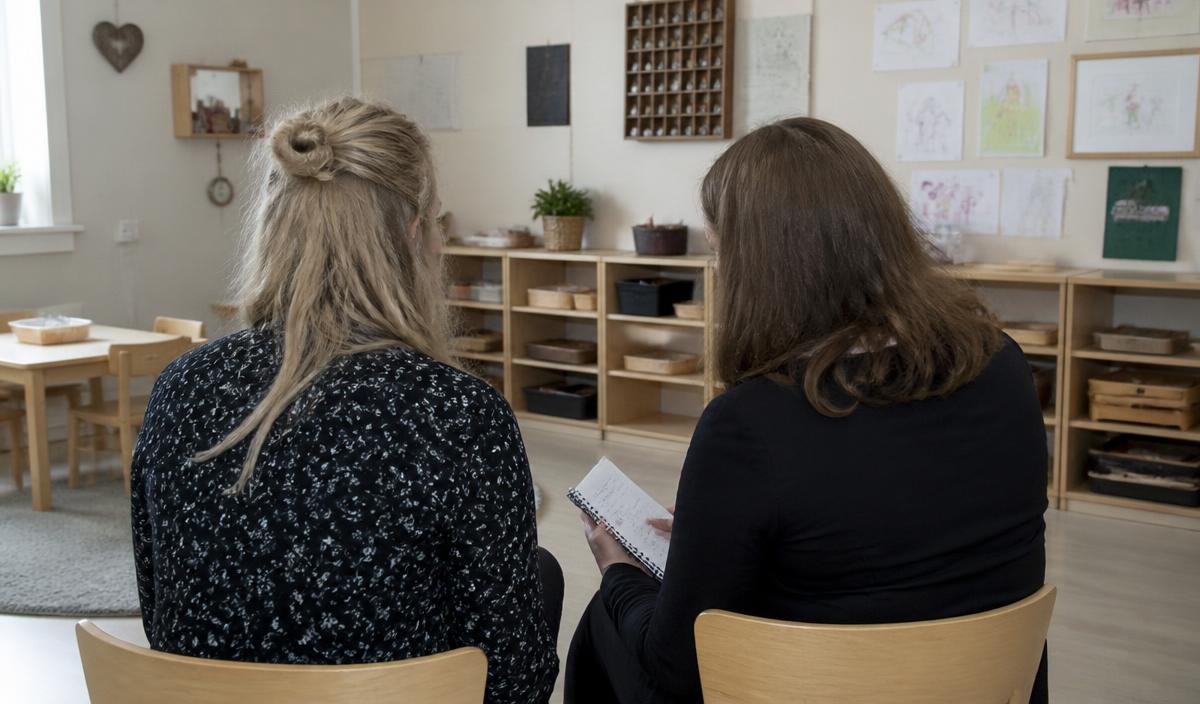
Choosing a preschool is about much more than finding one close to home. A preschool can look wonderful during a short visit, but what matters most is what everyday life will actually be like for your child.
How large are the groups? How stable is the staff? How much time do children spend outdoors? What happens when a child is upset, needs extra support or simply does not want to nap?
In Sweden, preschool — förskola — is the first stage of the education system. It is generally for children aged one to five, before they start preschool class (förskoleklass), and attendance is voluntary. Swedish preschools follow a national curriculum, but individual preschools can differ considerably in their organisation, staffing, environment and pedagogical approach.
A preschool visit is therefore a valuable opportunity to look beyond the website and ask questions about how the preschool actually works.
Here are 25 questions worth asking when visiting a preschool in Sweden. ## Teaching and everyday learning
What does a typical day look like here?
Start with the big picture.
Ask when children usually eat, play outdoors, have planned activities, rest and take part in free play. The answer can help you understand how structured the day is and whether the rhythm seems suitable for your child.
It is also worth asking whether routines differ depending on the child's age.
How do you work with the Swedish preschool curriculum?
Preschool in Sweden is not simply childcare. It is part of the education system and follows the national preschool curriculum, Lpfö 18, revised 2025.
The curriculum covers areas including language, communication, mathematics, health, movement, nature, sustainability, creativity and children's social development. Importantly, the curriculum sets goals for the preschool's work rather than individual achievement targets that each child must reach.
You do not need to hear educational jargon. What matters is whether staff can explain, in practical terms, how learning happens during an ordinary week.
How much time is spent on free play, reading, movement and planned activities?
The current Swedish preschool curriculum places particular emphasis on play, movement, language development and reading aloud. It also makes clear that there is no requirement for preschools to use digital learning tools and that learning tools should primarily be analogue.
Ask what this looks like in practice.
Do children have long periods when they can choose their own play? Is reading part of the daily routine? How often do they have activities involving music, movement, crafts, building, nature or storytelling?
How do you adapt activities for children of different ages and interests?
Two children of the same age may have very different needs.
Ask how staff adjust activities for children who are highly verbal, very active, shy, cautious in groups or interested in particular subjects.
A useful answer should give you a sense that teachers observe individual children rather than simply expecting every child to participate in exactly the same way.
Group size and staffing
How many children are in my child's group?
This is one of the most important questions to ask.
There is no legally fixed maximum group size for Swedish preschools. However, Skolverket currently recommends, as a guideline:
- 6–12 children in groups of children aged 1–3
- 9–15 children in groups of children aged 4–5
These are guidelines rather than legally binding limits. Skolverket also stresses that group composition, staff density, staff competence and the physical environment all affect whether a group size is appropriate.
So do not look at the number alone.
How many adults are normally with the group during the day?
The official children-per-staff figure can be useful when comparing preschools, but it does not necessarily tell you exactly how many adults will be physically present with your child's group at 10:30 on a Tuesday.
Ask what staffing looks like during:
- opening and closing hours
- lunch
- outdoor play
- excursions
- staff breaks
- staff meetings
Sweden does not have a single legally prescribed staff-to-child ratio for preschool, so understanding the preschool's actual organisation is particularly useful.
How many qualified preschool teachers work here?
Ask both about the whole preschool and your child's particular group.
In Sweden, förskollärare are university-educated preschool teachers. Other staff members may have different educational backgrounds and can also be experienced and valuable members of the team.
The aim is not to assume that a qualification alone determines quality. Instead, this question helps you understand the mix of education and experience within the team.
Skolverket itself recommends asking how many preschool teachers work at the preschool and how much trained staff there is in each group when comparing preschools.
What happens when a regular staff member is absent?
Ask:
- Do you have regular substitutes?
- Are substitutes familiar to the children?
- Do groups ever need to merge?
- How often does that happen?
Continuity can matter enormously to young children, particularly during the first months of preschool.
How stable is the staff team?
A simple way of asking this is: "How long have the educators in this group worked here?"
Staff changes happen everywhere and turnover alone does not prove that a preschool is good or bad. But knowing whether the team is largely established or has recently changed can help you understand what your child's first months may look like.
You can also ask how new employees are introduced to the children and the preschool's routines.
Safety, supervision and relationships
How do you supervise children outdoors and during excursions?
This is particularly important if the preschool regularly visits parks, forests, libraries or other places outside its own grounds.
Ask:
- How many adults normally accompany the group?
- How do you keep track of children?
- How are transitions handled?
- What happens if a child tends to run away from the group?
- Do younger and older children go on the same kinds of outings?
Do not be afraid to ask for a concrete example of how an excursion works.
How do you handle conflicts, exclusion or unkind behaviour between children?
Even very young children have conflicts. What matters is how adults notice and respond to them.
Swedish preschools must actively work to prevent degrading treatment (kränkande behandling), and staff who learn that a child believes they have been subjected to such treatment have reporting obligations within the organisation. The responsible provider must investigate and, when necessary, take action.
Ask how this works in everyday preschool situations — not only what the policy says.
How do you help a child who is sad, overwhelmed or having difficulty separating from a parent?
The answer can tell you a lot about the preschool's approach to emotional security.
Ask whether children have a particular educator they can become especially familiar with during the first period and how staff usually respond when a child is distressed.
Listen for an answer that leaves room for children to have different temperaments and needs.
How do you communicate with parents if something important happens during the day?
For example:
- an injury
- a difficult conflict
- a major emotional incident
- a significant change in eating or sleeping
- another event that affected the child
Ask what parents are told immediately and what is normally discussed at pick-up.
Outdoor time, meals and rest
How often are the children outdoors?
All Swedish preschools provide outdoor activities, but routines can differ substantially. Some primarily use their own yard, while others regularly visit playgrounds, parks or forests.
Ask:
- How many times a day are children usually outside?
- Do you go out in rain and snow?
- Where do you normally go?
- Does outdoor time vary by age?
If outdoor activity is particularly important to your family, this is a question worth exploring in detail.
Do you have your own outdoor yard, and how is it used?
A preschool without a large private yard is not automatically worse.
What matters is what alternatives exist and how easy they are to use.
If the preschool relies on nearby parks or public spaces, ask how often they visit them, how children get there and how supervision works during the journey.
How do meals work?
Ask:
- Is food prepared on site or delivered?
- What does a typical week's menu look like?
- How are allergies handled?
- Are vegetarian or other dietary requirements available?
- How are children encouraged to try unfamiliar foods?
- What happens if a child eats very little?
Mealtimes take up a significant part of a preschool day, so it is worth understanding not only the menu but also the atmosphere around food.
How does nap or rest time work?
Skolverket notes that rest routines differ between preschools and should take children's individual needs into account. Younger children may sleep indoors or outdoors in prams, while older children may have a quieter activity instead.
Ask:
- Where do children sleep?
- At what time?
- How long can they sleep?
- What happens if my child does not fall asleep?
- Can the routine be adapted if my child stops napping?
How do you handle nappies, toilet training and other personal routines?
For younger children, seemingly small practical details can make a big difference.
Ask how the preschool approaches:
- nappy changes
- toilet training
- handwashing
- comfort objects
- pacifiers
- changing wet clothes
Skolverket specifically encourages parents and preschools to discuss home routines that may help children feel secure and how these relate to preschool routines.
Communication and individual needs
How will I know how my child's day has been?
Some preschools communicate primarily during drop-off and pick-up. Others use apps, photographs, weekly newsletters or other digital systems.
Ask what you can realistically expect to hear about:
- how your child is settling in
- activities
- friendships
- eating and sleeping
- development
- concerns
Swedish preschools are expected to work closely and trustfully with guardians. Parents should also be invited to at least one development discussion (utvecklingssamtal) per year.
How do development discussions work?
Ask what is normally discussed and how the preschool follows a child's development and learning over time.
Remember that Swedish preschool does not work with individual academic attainment targets in the same way a school does. The focus should be on the child's development, learning, wellbeing and the opportunities the preschool provides.
How do you support children who need extra help?
This is worth asking even if your child does not currently need additional support.
Under the Swedish Education Act, children in preschool who need special support for physical, psychological or other reasons must receive the support their individual needs require. If such a need becomes apparent, the preschool principal is responsible for ensuring that support is provided, and guardians should have the opportunity to participate in designing the support.
You might ask:
- What happens if staff notice that a child needs extra support?
- Who is involved?
- What resources can the preschool access?
- How are parents included?
How do you support children who speak more than one language?
This can be particularly important for international and multilingual families.
The Swedish preschool curriculum says children with a mother tongue other than Swedish should have opportunities to develop both Swedish and their mother tongue. Skolverket also provides specific guidance on multilingual learning in preschool.
Rather than simply asking whether the preschool is "international", ask what multilingual support looks like in everyday practice.
Do staff use books in different languages? Songs? Visual support? Do they encourage children to use all of their languages?
How does the settling-in period (inskolning) work?
There is no single settling-in model used by every Swedish preschool.
Ask:
- How many days does it usually take?
- Is a parent expected to stay?
- For how long?
- Is there a key educator responsible for the child?
- Can the process be adjusted if a child needs more time?
- How do you decide when the child is ready for the parent to leave?
The best approach can vary from child to child, so flexibility can matter as much as the particular model used.
Practical questions that are easy to forget
What happens during holidays, staff training days and summer periods?
Ask whether:
- the preschool ever closes for planning or training
- children are temporarily placed at another preschool
- groups are combined during quieter holiday periods
- summer routines differ from the rest of the year
This can make a surprisingly large difference for working families, and the details can vary between providers and municipalities.
If you were a parent choosing this preschool, what would you want to know?
Finish with an open question.
You may get a far more revealing answer than you would from another checklist question.
You could also ask: "What do you think makes this preschool different from the others nearby?"
A thoughtful answer should tell you something specific about the children, educators, pedagogy or community — not simply that the preschool is "safe, fun and welcoming".
What should you observe during the visit?
Questions are only half of a preschool visit.
Take a moment to observe what is happening around you.
Do staff get down to children's level when speaking to them? Do children approach adults comfortably? Do educators seem to know what individual children are doing? Does the environment feel calm even when it is busy?
Look at the practical details too.
Can children reach books and toys themselves? Are there quiet areas as well as active ones? What does the outdoor environment look like? How are entrances and exits managed? Where do children eat and sleep?
Most importantly, try to imagine your own child spending eight hours there, rather than evaluating the preschool as an adult visitor.
Do not judge a preschool by one number
Group size matters. Staff qualifications matter. Staff density matters. Parent experiences matter.
But no single figure can tell you whether a preschool is right for your child.
Skolverket itself points out that preschool quality depends on several interacting factors, including staff competence, staff density, group composition and the indoor and outdoor environment.
That is why comparing several pieces of information can be more useful than simply looking for the preschool with the smallest group or the highest percentage of qualified staff.
Before your visit, look at available official information. During the visit, ask specific questions. Afterwards, compare what you heard with experiences from other parents.
The aim is not necessarily to find the preschool that looks "best" on paper.
It is to find the preschool where your child is most likely to feel safe, understood, supported and excited to spend their days.
Quick preschool visit checklist
Before leaving, make sure you know:
- Number of children in your child's group
- Typical number of adults with the group
- Number of qualified preschool teachers
- How substitutes and staff absences are handled
- How often children are outdoors
- How excursions are supervised
- How meals work
- How rest and naps work
- How conflicts and safety concerns are handled
- How parents receive information
- How inskolning works
- How additional support is provided
- How multilingual children are supported
- Holiday and summer arrangements
Looking at several preschools? Use School Reviews to compare available information about preschools in Sweden and read experiences shared by other families before making your decision.